
Healthy, established colonies from a breeder in the Netherlands.
Quantity:
€16,00
€75,00
€140,00
Interested?
Listed for sale are mixed size CB isopods; young or subadults, not mancae.
Cubaris sp. ‘Honeymoon Tiger’, isopod information > care > photos > video
Origin: Thailand.
Scientific name: Cubaris sp.
Trade name: Honeymoon Tiger, Yellow Tiger
Basionym: N/A
Synonyms: N/A
Family: Armadillidae
Common name: N/A
Isopoda World List: genus Cubaris
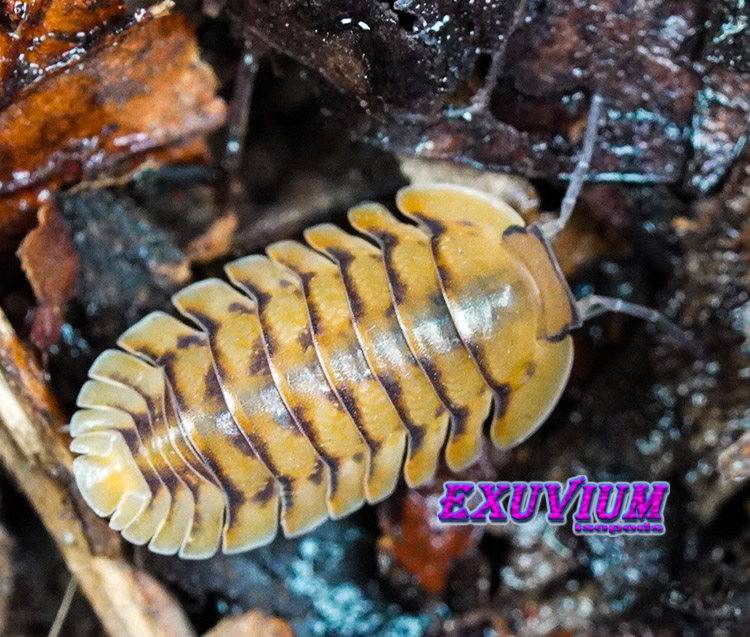
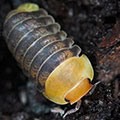
Cubaris sp. ‘Honeymoon Tiger’ (also frequently traded under the name ‘Yellow Tiger’ or sometimes Nesodillo sp. ‘Honeymoon Tiger’) is a visually striking and highly sought-after isopod originating from the warm, humid forests and cave systems of Thailand. Reaching up to 22mm in adulthood, this species earns its distinctive name from its vibrant yellow base coloration boldly contrasted with dark, dramatic “tiger” stripes across its back, all complemented by the endearing “duck face” characteristic of many Southeast Asian isopods. While they can be somewhat shy initially and are prone to burrowing into deep substrate to molt and reproduce, they will become much bolder and more active during the evening hours as their colony establishes itself. To truly thrive, the Honeymoon Tiger requires a consistently warm and highly humid terrarium environment featuring plenty of damp forest moss, decaying white wood, and deep leaf litter to accurately mimic their natural tropical habitat. Their diet primarily consists of this environmental detritus, though it should be regularly supplemented with a reliable calcium source (like cuttlebone or better limestone) and occasional protein offerings to support their health and moderate breeding rate. Considered to be of medium care difficulty, they are incredibly rewarding to keep, making them a breathtaking, beautifully colored display species for hobbyists looking to elevate their collection.
Cubaris sp. ‘Honeymoon Tiger’, isopod care
Size: adults may reach a length of 22 mm.
Activity: anytime; mostly night active.
Terrarium: keep ⅓ moist with moss, pieces of rotting white wood and also decaying leaves. Check out also our premium substrate.
Temperature: 22 – 28°C
Humidity: 60 – 80%.
Diet: fruits, veggies, greens, fish-food, forest moss, lichen, decaying leaves, rotting white wood, molting of invertebrates and reptiles. They will enjoy a slightly higher protein-based diet, at least 2x times a week. Be sure to check out our Protein mix foods. Also don’t forget a calcium source (cuttlefish bone, limestone & oyster seashell, limestone rock) to keep them healthy.
Difficulty: moderate to easy.
Reproduction rate: fair.
Growth rate: normal to slow.
Lifespan: 2 to 3 years for CBB isopods.
We provide reliable shipping across the EU, including popular destinations like Germany, France, and Italy. See our full list of delivery locations here.

 Exuvium Isopods