
Captive bred invertebrates from a breeder in the Netherlands.
Quantity:
€20,00
Interested?
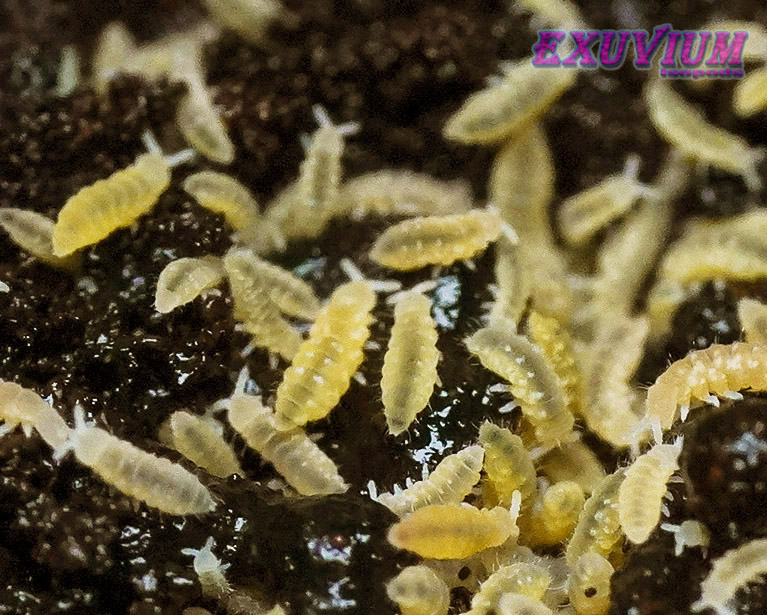
Ceratophysella isabellae ‘Yellow’, springtail information > care > photos
Origin: cultivated albino variety from Ceratophysella isabellae ‘Lilac’.
Scientific name: Ceratophysella isabellae
Morph name: Yellow, Yellow Albino
Synonyms: –
Family: Hypogastruridae (Collembola).
Common name: Yellow Springtails.
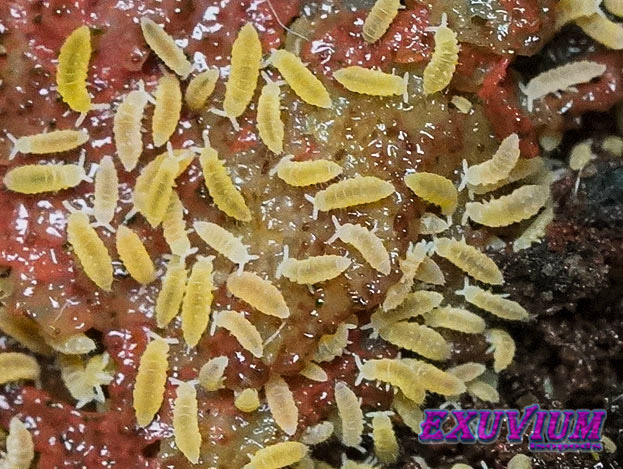
Add a pop of color to your bioactive setup with the Ceratophysella isabellae ‘Yellow’ springtail! This striking morph was selectively bred from the standard ‘Lilac’ variety, resulting in a vibrant, pure yellow cleanup crew that stands out beautifully against dark substrates and charcoal. While their wild ancestors hail from the freezing, high altitudes of the Alaskan Range, this captive-bred lineage thrives in standard vivarium conditions. They are active, eye-catching, and excellent at breaking down decaying organic matter in your terrarium.
Ceratophysella isabellae ‘Yellow’, springtails care
Size: adults may reach a length of 4 mm.
Activity: anytime; mostly night active.
Substrate: organic potting soil, or for best results check out our premium substrate. It should be kept damp at all times.
Temperature / Humidity: As a european springtail species Yuukianura aphoruroides does not need additional heating during winter. Temps can range from 10°C min. to 28°C max with optimal being to 22°C to 26°C. Create a humidity / temperature gradient by placing sphagnum moss at the side of the container with much less openings. Provide leaf litter or empty egg cartons for shelter.
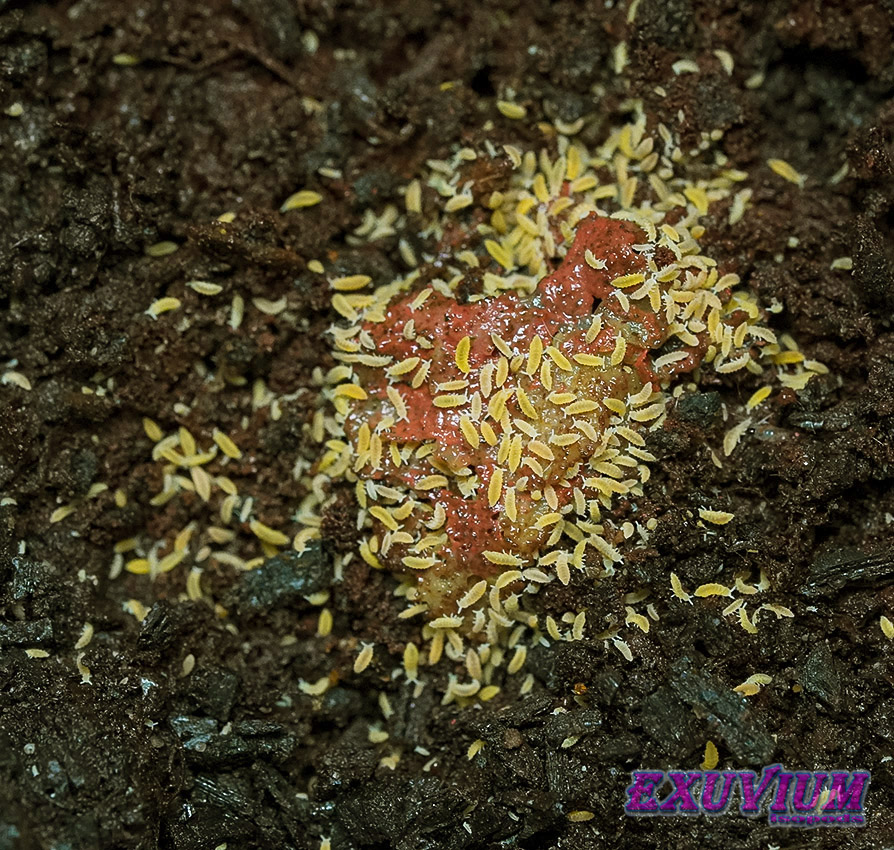
Diet: Two to three grains of rice are sufficient for twenty individuals, to be left to mold and fine fish food (thus not pellets) should be given daily in small portions. They also eat decaying leaves and mushrooms. Fruits and vegetables may also be offered, but again in tiny portions. Food should not be offered in excess because mold will develop faster than what the springtails can consume / control. Be sure to check out ourProtein mix foods. Also a calcium source (cuttlefish bone, limestone & oyster seashell, limestone rock) is a good idea, to keep them healthy.
Difficulty: easy.
Reproduction rate: prolific
Growth rate: normal to slow.
Caring for Ceratophysella isabellae ‘Yellow’ is incredibly easy and highly rewarding for beginners looking to establish a thriving cleanup crew. Because they are well-suited for humid or moist environments, they make an excellent addition to bioactive terrariums and vivariums where they have a fantastic appetite for breaking down waste, decaying leaves, and leftover food. To set up a successful dedicated culture, provide them with a substrate like our Yield-Max Springtail Base, ensuring it remains consistently moist but never completely waterlogged. They do best when kept at comfortable room temperatures between 18°C to 22°C with humidity levels ranging from 75% to 85%. As fast reproducers, these vibrant little cleaners will quickly multiply if supplemented with a varied diet; they readily accept nutritional yeast, dry rice, spirulina powder, fish flakes and vegetable scraps. Their enclosure needs to be escape-proof, perhaps with only a couple small openings, covered our ultra fine mesh, since they can even climb on the wet walls of a plastic container.
⚠️ Ceratophysella isabellae springtails have small and soft bodies. Great attention should be given to not accidentally crush them. Even watering the substrate with a bottle of water from a distance could kill them! Rather it is advisable to water the substrate with a squeeze bottle, or with a teaspoon. Pour water from a short distance on the sides and in the center of the enclosure.
We provide reliable shipping across the EU, including popular destinations like Germany, France, and Italy. See our full list of delivery locations here.


 Exuvium Isopods