
Choosing the Best Cleanup Crew for High-Humidity Enclosures
Introduction > Top species for Paludariums > Top choices > What to avoid
Introduction
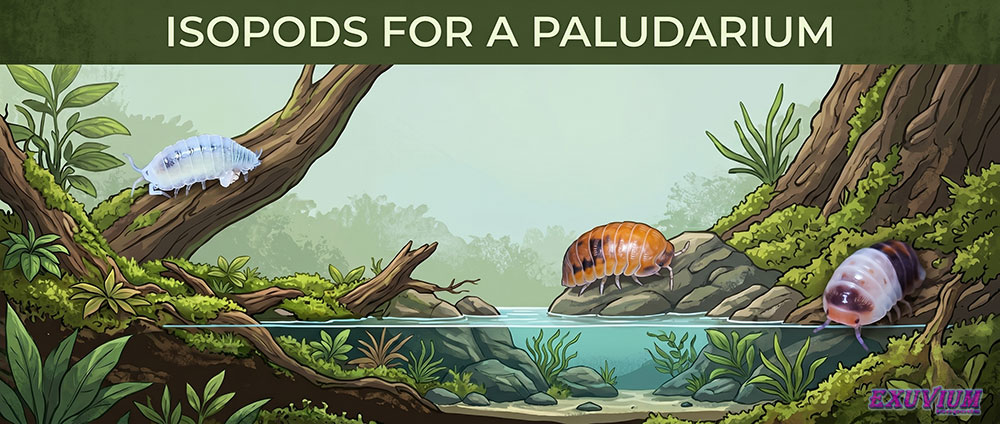
When it comes to paludariums, you have to be careful with your isopod choice. Because paludariums feature both terrestrial and aquatic zones, the environment is incredibly humid, and the risk of isopods wandering into the water and drowning is high.
Because of these conditions, the “best” species are those that thrive in saturated environments, are small enough not to ruin your landscaping, and are less prone to taking an accidental swim.
Here are the top choices for a paludarium cleanup crew:
Top Isopod Species for Paludariums
1. Dwarf White Isopods (Trichorhina tomentosa)
Dwarf Whites are universally considered the gold standard for high-humidity enclosures, terrariums, and paludariums.
- Why they work: They are tiny (about 2-4mm), meaning they are practically invisible and won’t disturb your delicate paludarium plants. They spend almost all of their time burrowed in the substrate, which keeps them away from the water feature and prevents drowning.
- Bonus: They reproduce parthenogenetically (females clone themselves), so a small starter culture will quickly establish a booming population. Want some? Go to the shop page: Trichorhina tomentosa.
2. Dwarf Purple Isopods (Trichoniscidae sp.)
If you want something similar to the Dwarf White but slightly more active above ground, Dwarf Purples are an excellent alternative.
- Why they work: They are also incredibly tolerant of wet, boggy substrate. They are just as small as Dwarf Whites but tend to hang out slightly higher up in the leaf litter rather than strictly burrowing.
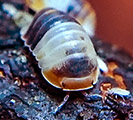
3. Little Sea Isopods (Cubaris murina)
If you want an isopod that is actually visible to the naked eye (unlike the dwarfs), Cubaris murina is your best bet. There are also color and pattern morphs of this species. Want to check them out? Go to their individual shop pages: Cubaris murina ‘Anemone’, Cubaris murina ‘Glacier’, Cubaris murina ‘Mandarin’, Cubaris murina ‘Papaya’, Cubaris murina ‘Pearls’.
- Why they work: Originally found in tropical regions, they are exceptionally tolerant of high humidity and wet soil. While they are larger, they are relatively docile, won’t eat your live plants, and are a fantastic small to intermediate-sized cleanup crew.
Comparing the Top Choices
| Feature | Dwarf White | Dwarf Purple | Little Sea (Cubaris murina) |
| Size | Tiny (~3mm) | Tiny (~3mm) | Medium (~12mm) |
| Visibility | Very Low (Burrowers) | Low (Leaf litter dwellers) | Moderate (Surface dwellers) |
| Moisture Tolerance | Extremely High | Extremely High | High |
| Drowning Risk | Very Low | Very Low | Moderate |
Species to Avoid
- Large Porcellio species (e.g., Dairy Cows): They are protein-hungry, breed explosively, and will happily devour your live plants if they run out of food. They also prefer a slightly drier gradient.
- Armadillidium species (e.g., Zebras, Roly Polies): Most of these species require a distinct dry side to molt properly. In a swampy paludarium, they will often fail to molt and die off.
A Quick Tip on Drowning: Even with moisture-loving species, you should create “escape routes” in your water feature. Strategically placed cork bark, driftwood, or stones that breach the surface of the water will allow any clumsy isopods to crawl back onto dry land.


 Exuvium Isopods
Leave a comment