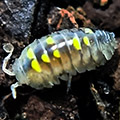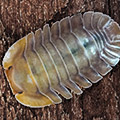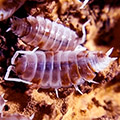
Healthy, established colonies from a breeder in the Netherlands.
Quantity:
€6,00
€27,50
€50,00
€73,50 
€117,50
€225,00
Interested?
Listed for sale are mixed size CB isopods; young or subadults, not mancae.
Armadillo tuberculatus, isopod information > care > photos
Origin: Mediterranean region; Greece and Turkey.
Scientific name: Armadillo tuberculatus
Synonyms (unaccepted): Armadillo asiaeminoris, Armadillo cinctus, Armadillo piger.
Subspecies (uncertain): Armadillo tuberculatus cytheriacus.
Variety (uncertain): Armadillo tuberculatus var. ophidusensis.
Family: Armadillidae
Common name: N/A
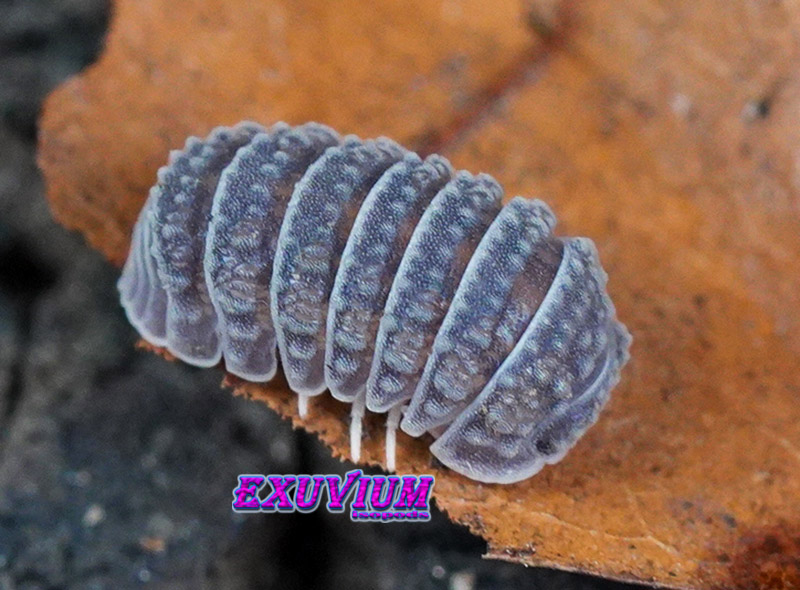
Armadillo tuberculatus is a striking, naturally occurring Mediterranean species that stands out for its heavily textured, bumpy exoskeleton and robust build. True to its specific name, tuberculatus displays rows of pronounced, raised tubercles across its dorsal plates, finished in a handsome, matte mix of slate-grey, charcoal, and dusty earth tones that perfectly camouflage it against rocky terrain. As a true conglobating species, these heavy-bodied isopods roll into rigid, seamless spheres when disturbed, relying on their rough, armored texture as an impenetrable defensive barrier. Adapted to arid scrublands and rocky limestone hillsides, they are predominantly nocturnal, emerging under the cover of darkness to forage slowly and deliberately across the substrate. Gentle, slow-growing, and exceptionally drought-hardy, Armadillo tuberculatus makes a fascinating, low-maintenance display group for any enthusiast seeking a unique, textured Mediterranean crustacean.
Armadillo tuberculatus, isopod care
Size: adults may reach a length of 8 – 15 mm.
Activity: mostly at night and during dusk.
Terrarium: keep ⅓ moist with moss, pieces of rotting white wood and also decaying leaves. Check out also our premium substrate and ultra premium substrate.
Temperature: 15 – 28°C
Humidity: 40 – 60%; they are adaptable.
Diet: fruits, veggies, greens, fish-food, decaying leaves, white rotten wood, lichen, mushrooms, molting of invertebrates and reptiles. They will enjoy a slightly higher protein-based diet, at least 2x times a week. Be sure to check out our Protein mix foods. Also don’t forget a calcium source (cuttlefish bone, limestone & oyster seashell, limestone rock) to keep them healthy.
Difficulty: easy.
Reproduction rate: moderately prolific.
Growth rate: slow.
Check out also:
Pink Dalmatian

Pink

Israel

White Pina
We provide reliable shipping across the EU, including popular destinations like Germany, France, and Italy. See our full list of delivery locations here.