
Complete starter kit for isopods : Basic version with sizes 1, 2 & 3
Contents > Prices > Instructions of use
From €30,00 (see all the prices in the second table below)
Basic isopods starter kit includes
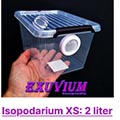
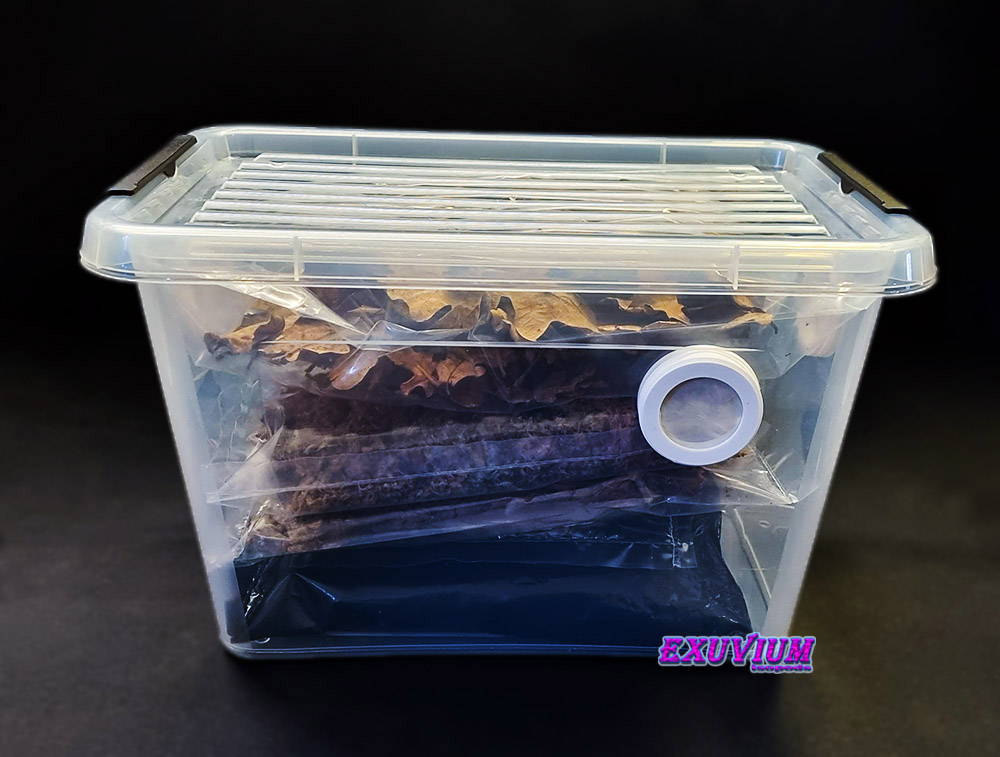 | isopodarium (faunarium) 6.5 L with 4x air vents (also 4.5 L and 12.5 L available) |
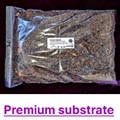
 | substrate premium for isopods & millipedes 1 liter |
 | forest moss 500 ml |
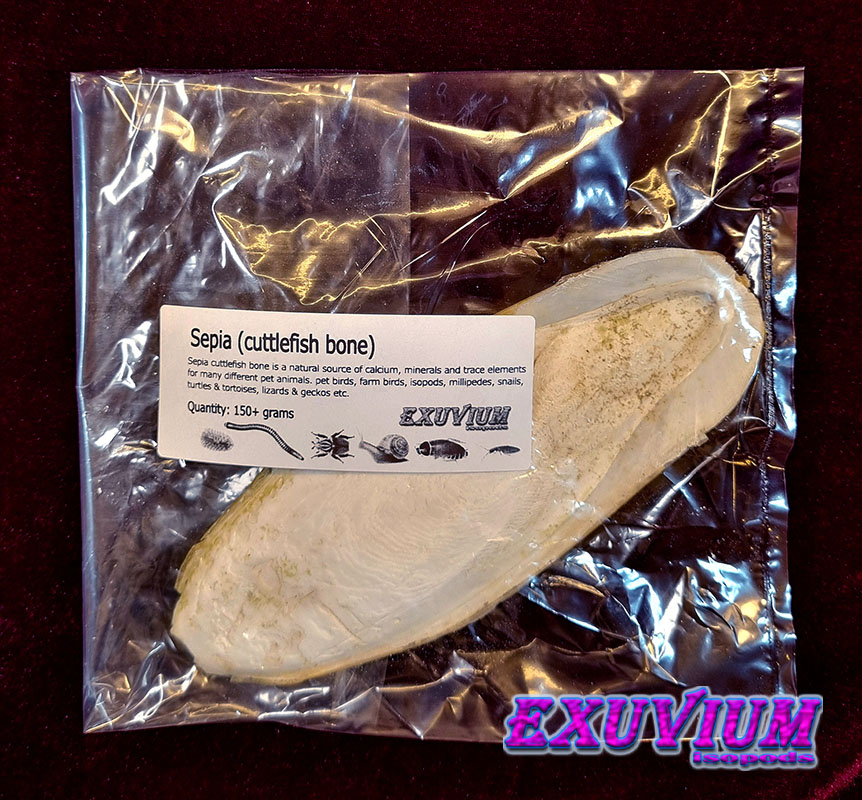 | cuttlefish bone |
 | decaying leaves 1 liter |
 | slab of cork bark |
Contents > Prices > Instructions of use
Prices
| Kit Version | Volume | Ideal For | Price |
| Basic 1 | 4.5 Liters / 4 vents | Small colonies / Beginners | €30,00 |
| Basic 2 | 6.5 Liters / 4 vents | Growing colonies (Standard) | €33,00 |
| Basic 3 | 12.5 Liters / 4 vents | Large species / Rapid breeders | €36,00 |
Interested?
⚠ Please note: the images below are just an illustration to demonstrate the placement of each item in the isopodarium. For the actual look you may view the 4.5 liter here, the 6.5 liter and the 12.5 liter.
Contents > Prices > Instructions of use
Instructions of use
- Substrate

Spread the substrate equally in the isopodarium. - Forest moss
Now instead of sphagnum moss, we offer forest moss which is better for arthropods, because they also love to eat it!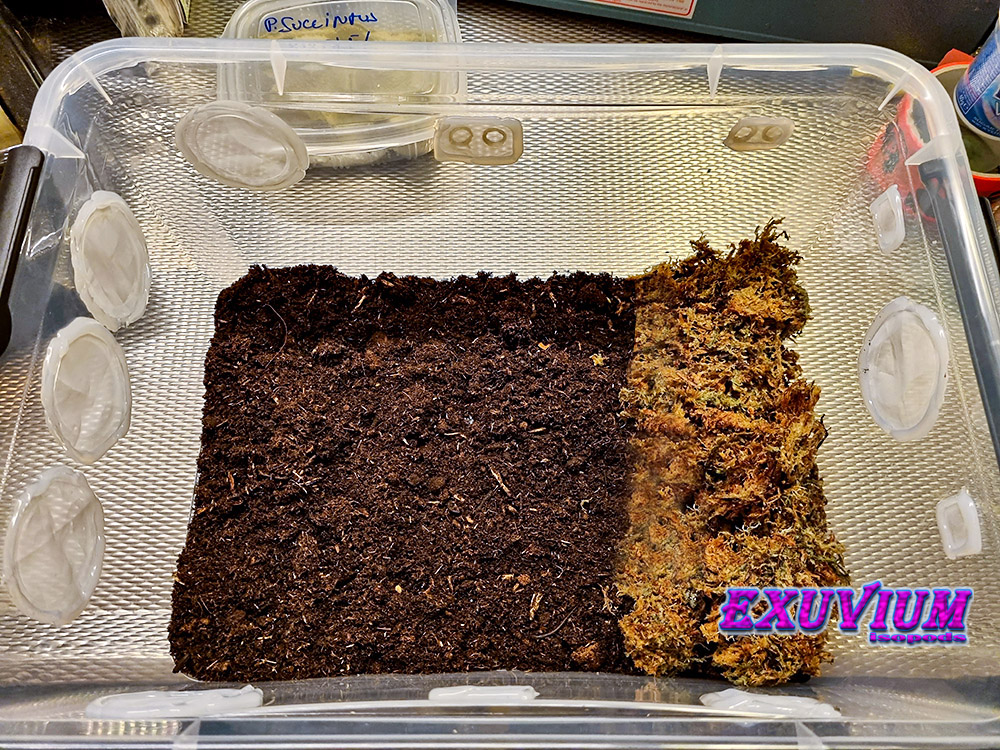
a) isopods requiring high humidity: For isopods requiring high humidity, at least 1/3 of the isopodarium should be covered with sphagnum moss. Some species may require a bit more or less. Isopod species requiring higher humidity are most of the Armadillidium spp., Armadillo officinalis, Cristarmadillidium muricatum, Cubaris spp., Cylisticus convexus, Isopoda sp. ‘Fancy Gator’, Isopoda sp. ‘Shiny Gator’, Merulanella spp, Nesodillo arcangelii ‘Shiro Utsuri’, Nesodillo sp. ‘Purple Ghost’, Sinodillo sp. ‘Red Head’ etc.
b) isopods requiring low humidity: For isopods requiring low humidity, only one corner, or 1/5 of the isopodarium should be covered with sphagnum moss. Some species may require a bit more or less. Isopod species requiring low humidity include: Porcellio spp (the majority of them except Porcellio laevis). Some of these include: Porcellio bolivari, Porcellio flavomarginatus, Porcellio haasi, Porcellio hoffmannseggii, Porcellio magnificus, Porcellio nicklesi, Porcellio pseudornatus and a couple more from this genus). - Cuttlefish bone

Cuttlefish bone (or else known as sepia) is a natural source of calcium for many arthropods and many other pets, including birds. The isopods need that in order to build their exoskeleton, and also to have healthy broods. - Decaying leaves
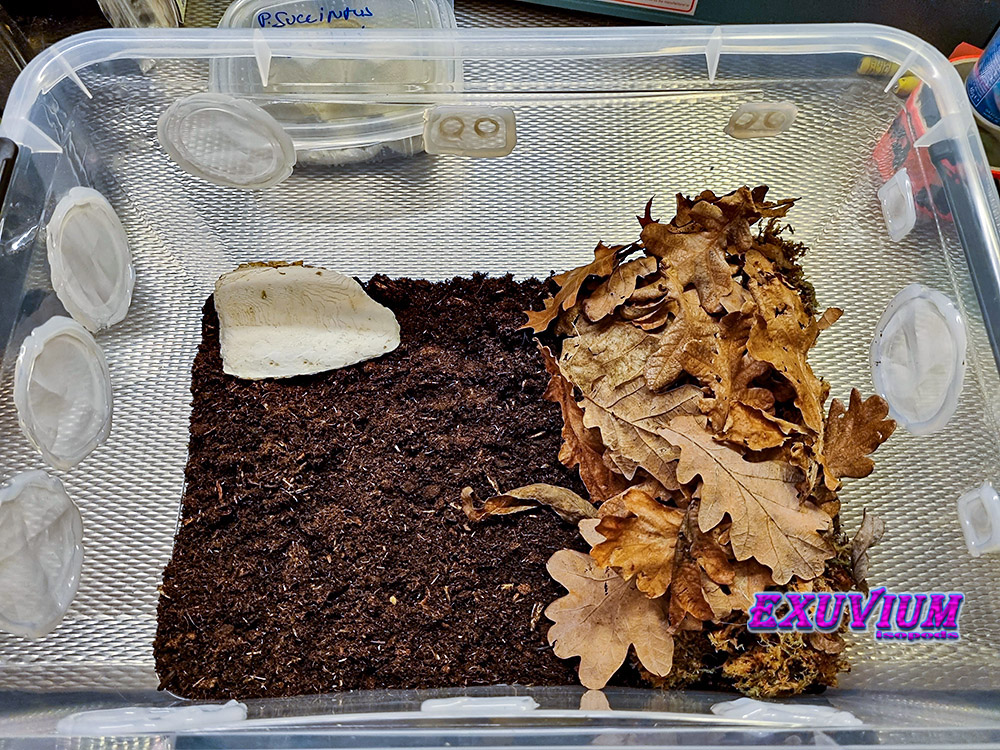
Most isopods require leaves in their diet, it is part of their natural diet as detritivores (decomposers). The leaf litter can be placed on the humid part of the isopodarium, up to the middle of it, leaving 1/3 area of the isopodarium open, to allow adequate air flow in the container. - Cork bark

Now we are offering cork bark (photo above will be replaced soon). Cork bark is cleaner than tree bark and thus more convenient. Cork bark is serving two or more purposes, it is great as a hiding spot, it helps to keep the humidity stable, and also the isopods eat it.
We provide reliable shipping across the EU, including popular destinations like Germany, France, and Italy. See our full list of delivery locations here. Food and equipment are shipped worldwide.
See all the Equipment items for sale



 Exuvium Isopods