
Trichorhina tomentosa (Dwarf White Isopods) for sale
Lees de pagina in het Nederlands 🇳🇱
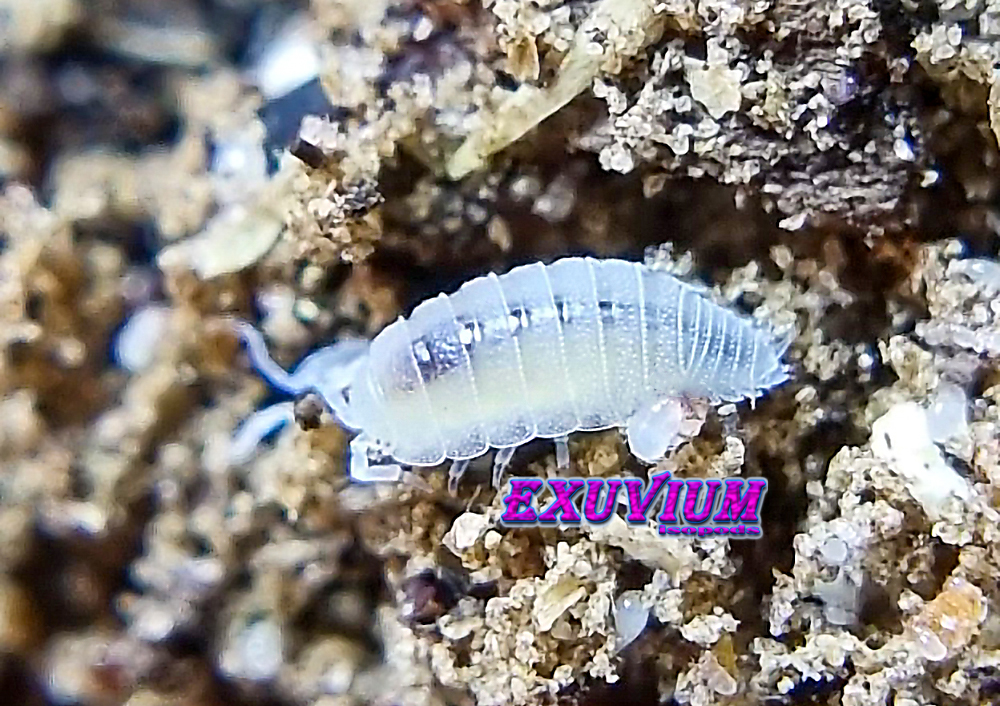


€5,00 : 30+ isopods
Interested?
Trichorhina tomentosa, isopod information > care > FAQ
Origin: Originally from central and south America, and then introduced to Europe as an alien species.
Scientific name: Trichorhina tomentosa
Basionym: Alloniscus tomentosus
Synonyms (unaccepted): Alloniscus tomentosus, Bathytropa thermophila, Bathytropina thermophila, Gedania tomentosa, Trichorhina vannamei.
Family: Platyarthridae
Common name: Porcelain Woodlouse, Dwarf White Isopod; White Dwarf Isopod.
Trichorhina tomentosa – or else known as white dwarf isopod – is a dwarf transparent-white isopod measuring just 4 mm. They are a great addition to a humid terrarium / vivarium due to their great decomposing capabilities. Their prolific nature, ease of care, and ability to consume waste, made the dwarf white isopods widely favored and used in bioactive setups, along with other isopods and springtails. Not only are they used as clean-up crews; they may also provide a food source for other terrarium animals, such as dart frogs and geckos.
Trichorhina tomentosa, isopod care
Size: adults reach a length of 3 – 4 mm
Activity: mostly nighttime active.
Terrarium: keep ⅔ moist with moss, pieces of rotting white wood and also decaying leaves. Trichorhina tomentosa isopods love to dig into the substrate, thus make sure your substrate is at least 5 cm deep. They also eat it. Check out also our premium substrate. They are escape artists however, thus we recommended using our air vents with extremely fine mesh.
Temperature: 15 – 28°C
Humidity: 55 – 75%
Diet: fruits, veggies, greens, fish-food, forest moss, lichen, decaying leaves, rotting white wood, mushrooms, molting of invertebrates and reptiles. This dwarf and highly active isopod species requires protein as well, at least 2x each week. Be sure to check out our Protein mix foods. Also don’t forget a calcium source (cuttlefish bone, limestone & oyster seashell, limestone rock) to keep them healthy.
Difficulty: easy
Reproduction rate: extremely prolific with large broods; reproduction age starts early. They can also reproduce asexually.
Growth rate: fast
The unique characteristic of this isopod is that it can reproduce asexually, via parthenogenesis. Thus a single isopod can start a whole colony.
FAQ
Are they really good in fighting mold?
Trichorhina tomentosa is the no. 1 isopod species out there to keep mold from expanding.
I can’t find springtails, or when I do I can’t keep them for too long. Can these isopod replace springtails and can I keep them longer than the springtails?
Yes! Trichorhina tomentosa isopods can effectively replace springtails, as they wipe-clean everything from mold! Plus, they are very easy to keep, much easier than springtails. Just remember that they like it more moist than the average. Yet, they are somewhat drought tolerant.
Can I keep them with other isopods?
Sure. You can keep them with other isopods of the same humidity requirements (thus not together with spanish isopods that prefer it much drier).
Can they climb well because I don’t want them to climb out of the box
Given that some isopods can climb vertically on plastic, that’s a good question. These isopods are mostly buried into the soil, busy with decomposing organic matter on the surface of the substrate.

We provide reliable shipping across the EU, including popular destinations like Germany, France, and Italy. See our full list of delivery locations here.



 Exuvium Isopods