
Healthy, established colonies from a breeder in the Netherlands.
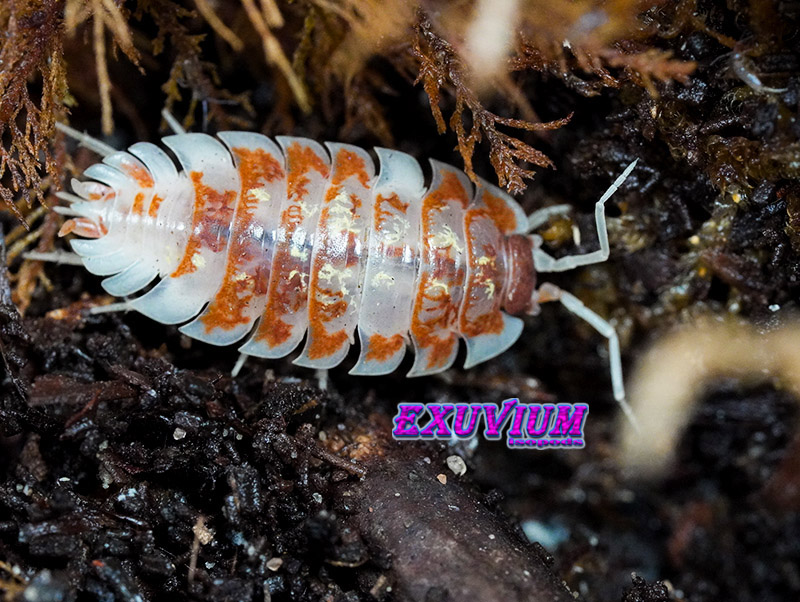
- €105,00 : 5x isopods
- €200,00 : 10x isopods
Interested?
Listed for sale are mixed size CB isopods; young or subadults, not mancae.
Oniscus asellus ‘Orange Mardi Gras’, isopod information > care > photos > video
Distribution: West and North Europe.
Scientific name: Oniscus asellus
Trade name / variety name: Orange Mardi Gras
Basionym: –
Synonyms (unaccepted): Oniscus affinis, Oniscus fossr, Oniscus lamperti, Oniscus languidus, Oniscus murarius, Oniscus murarius var.nodulosus, Oniscus nodulosus and many more.
Family: Oniscidae
Common name: Orange Mardi Gras Skirted Isopod.
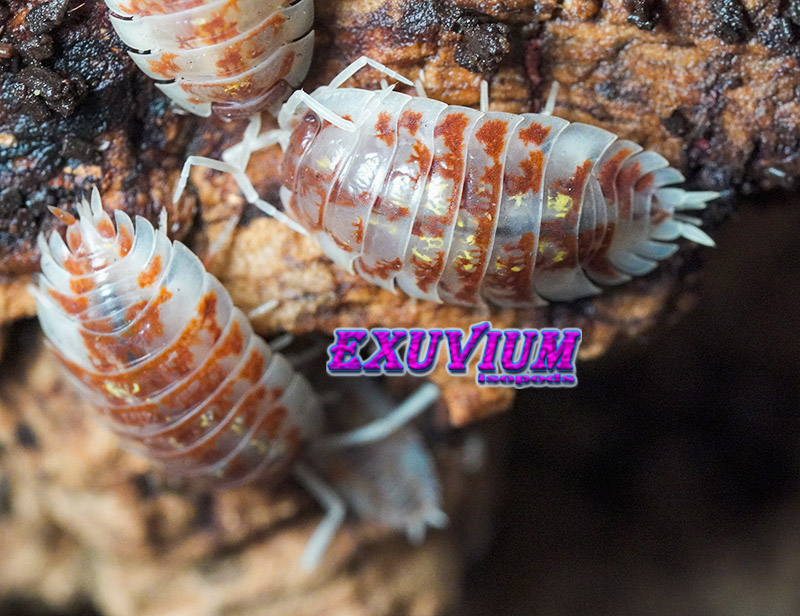
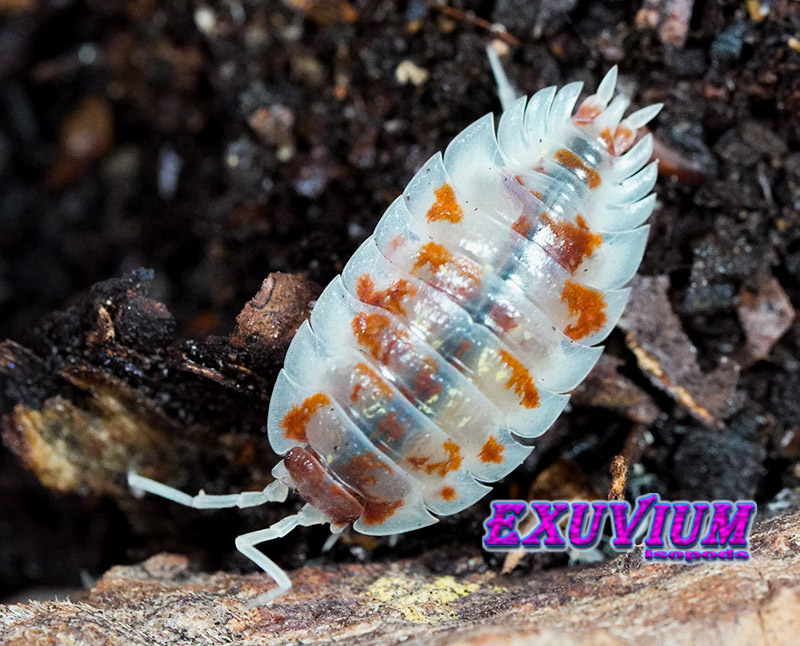
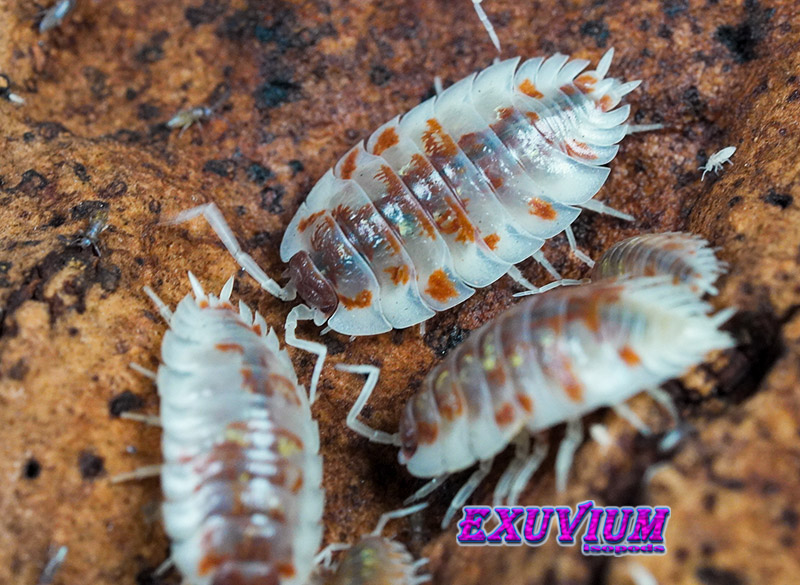
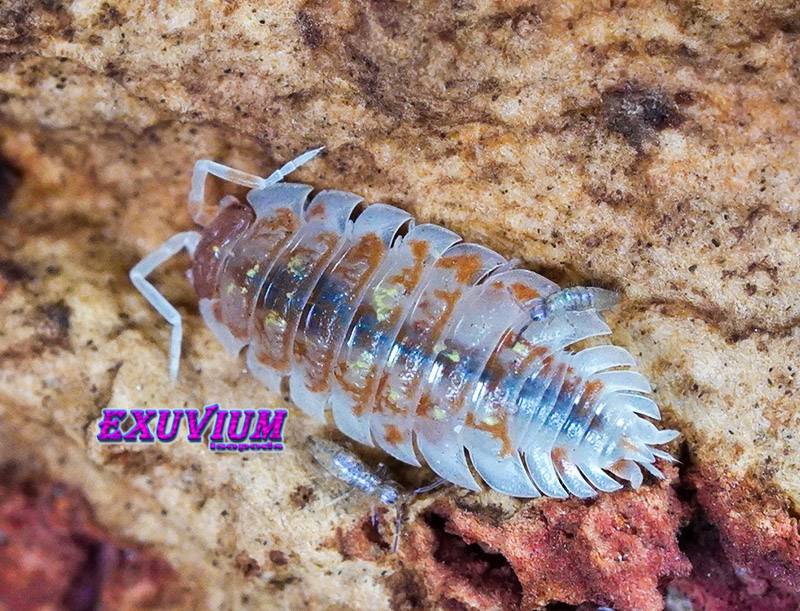
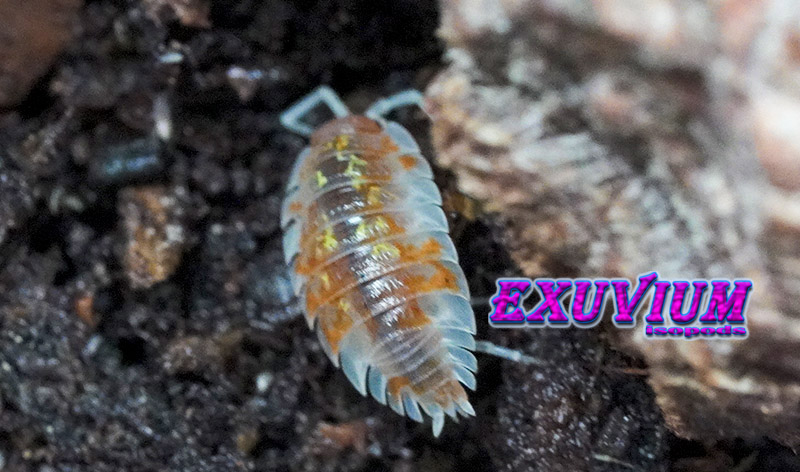
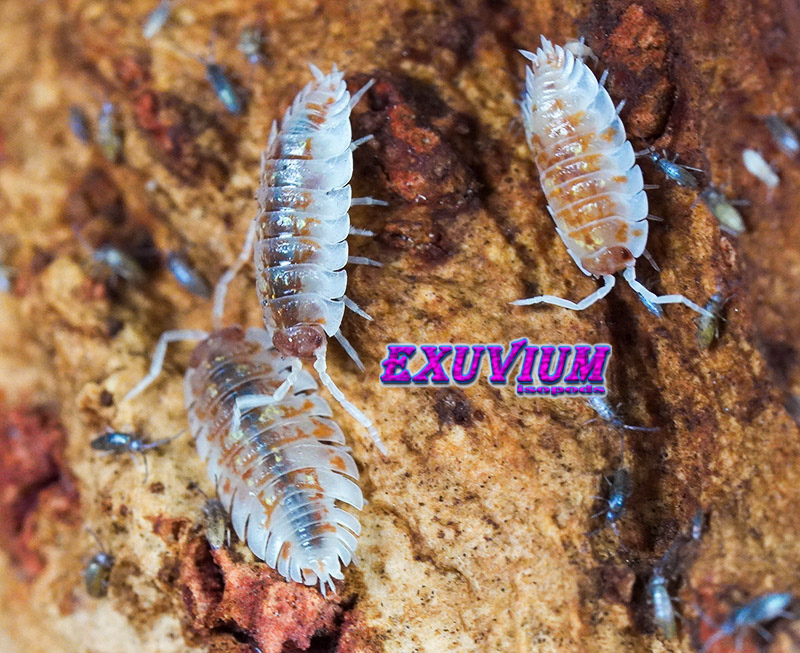
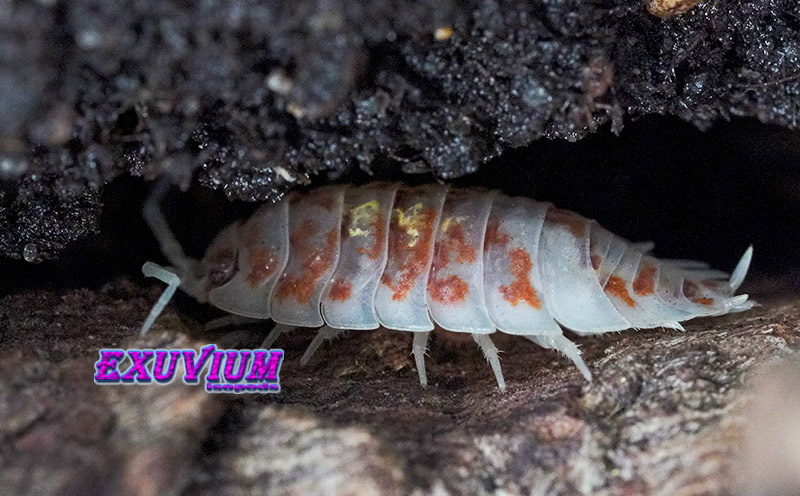
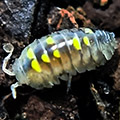
Turn every day into a celebration with the ‘Orange Mardi Gras’ Isopod. This stunning designer morph takes the classic “confetti” pattern of the standard Mardi Gras and gives it a vibrant twist. Instead of the usual black pigmentation, this variety displays splashes of bright orange / red and white, all while retaining the signature neon-yellow spots that make this line famous.
As a morph of the Skirted Woodlouse (Oniscus asellus), these are large, flat, and impressive display animals. Whether you are looking to brighten up a bioactive enclosure or add a crown jewel to your collection, the Orange Mardi Gras delivers a pop of color that is impossible to miss.
Why you’ll love them:
- Incredible Color: A chaotic, beautiful mix of orange, white, and yellow, sparkling in front of your eyes.
- Beginner Friendly: Just as hardy and forgiving as the wild type.
- Active Display: They are bold, large, and easy to spot in a terrarium.
Oniscus asellus ‘Orange Mardi Gras’, isopod care
Size: adults may reach a length of 16 mm up to 20 mm.
Terrarium: keep ½ moist with moss, pieces of tree bark or cork bark, and also decaying leaves. Check out also our premium substrate and ultra premium substrate. Oniscus asellus isopods will burrow into the substrate if it’s deep, but that’s not a prerequisite.
Temperature: 15 – 25°C; they prefer it cooler.
Humidity: 60 – 75%; they are also drought tolerant.
Activity: early morning; day; night.
Diet: fruits, veggies, greens, fish-food, decaying leaves, forest moss, lichen, white rotten wood, molting of invertebrates and reptiles. And 2x times a week provide a source of protein. Be sure to check out our Protein mix foods. Also don’t forget a calcium source (calcium triple boost, cuttlefish bone, limestone granules & oyster seashell, limestone rock) to keep them healthy.
Difficulty: easy
Reproduction rate: fair; not fast breeders.
We provide reliable shipping across the EU, including popular destinations like Germany, France, and Italy. See our full list of delivery locations here.



 Exuvium Isopods