
A basic care guide for cockroaches as pets, mostly aiming to help the beginner. Chapters include: choose a suitable housing – what to feed – humidity & temperature – how to breed roaches, and other useful tips for novice keepers/breeders of roaches. As you will see by reading this article, keeping roaches as pets was never easier.

updated: 17 April 2025
Read time: 15 minutes
Introduction > Housing > Housing a) > Housing b) > Housing c) > Diet a) & b) > Diet c) > Humidity & Temperature > Breeding > FAQ
Introduction
Most cockroaches that are kept as pets are not complicated arthropods and they are easy to keep and breed. Most of them are omnivores and thus feeding should also be without issues. But a possible downside with roaches as pets is that some species are able to climb vertically on plastic surfaces. And also that a few of them can become pests. This article will focus only on tropical cockroach species, that even if they escaped, they would not survive outside their enclosure. There are roach species that cannot climb vertically on plastic, and other roach species that do climb vertically on plastic. The offspring of some species cannot climb, while the adults can. And finally there are roach species that do climb and also fly! (Gyna spp. for example). Therefore, you should read about the roach species you are interested in, to prevent any unpleasant surprises.
Housing
Pet roaches are usually housed inside plastic storage boxes. Although glass terraria can be used, these are heavy and in general are not considered a good choice. We could divide their containers generally in three types: a) Those that are for roaches that cannot climb vertically on plastic b) Those that are for roaches that do climb vertically on plastic and c) those that are for flower roaches.
I have seen, unfortunately, beginners housing pet roaches in unsuitable containers. As most roaches are escape artists, selecting a suitable container is of crucial importance.
Introduction > Housing > Housing a) > Housing b) > Housing c) > Diet a) & b) > Diet c) > Humidity & Temperature > Breeding > FAQ
Housing a): roaches that don’t climb
Housing roaches that don’t climb vertically on plastic surfaces in all stadia of growth, can be done by using somewhat medium to large plastic containers, as these are usually larger than usual roach species.
Some roach species that cannot climb vertically on plastic include the following: Archimandrita tesselata, Blaberus craniifer, Blaberus giganteus, Blaptica dubia, Byrsotria cabrerai, Byrsotria fumigata, Eublaberus distanti, Eublaberus marajoara, Eublaberus posticus, Eublaberus serranus, Hemiblabera tenebricosa, Polyphaga aegyptiaca and others.
I make these air vents with an ultra fine mesh, exactly to prevent / support all those factors I have mentioned above. Now back to the isopodarium for isopods requiring high humidity. We have mentioned the size and number of openings. But for isopods that can vertically climb on smooth surfaces, you have the option to use an escape-proof isopodarium. All other sizes of isopodaria are:
Introduction > Housing > Housing a) > Housing b) > Housing c) > Diet a) & b) > Diet c) > Humidity & Temperature > Breeding > FAQ
Housing b): roaches that do climb
Housing roaches that can climb vertically on plastic surfaces in all stadia of growth, can be done by using somewhat medium size plastic containers. What is important here is that the lids need to close tightly, so that the roaches cannot push through the lid and escape. It has been said that applying vaseline on the top of the enclosure prevents the roaches from escaping. But this is not a secure measure. I have personally seen roaches climbing were there is vaseline. The ideal is to use containers that are waterproof, and seal with rubber under the lid, but these are expensive. Another method is to use empty paint buckets, or plastic buckets in general, as these are absolutely escape-proof.
Some roach species that can climb vertically on plastic include the following:
Corydidarum magnifica, Corydidarum tarsalis, Deropeltis paulinoi, Elliptorhina chopardi, Elliptorhina davidi, Elliptorhina javanica, Elliptorhina laevigata, Ergaula capucina, Ergaula pilosa, Gromphadorhina oblongata, Gromphadorrhina portentosa, Gyna caffrorum, Gyna capucina, Gyna centurio, Gyna lurida, Hormetica sp. Colombia, Lucihormetica grossei, Lucihormetica subcincta, Lucihormetica verrucosa, Opisthioplatia orientalis, Panchlora nivea, Panchlora sp. Costa Rica, Panchlora sp. ‘Giant’, Panchlora sp. ‘Speckled’, Panchlora sp. ‘White’, Panesthia angustipennis, Panesthia angustipennis cognata, Panesthia angustipennis spadica, Perisphaerus pygmaea, Pseudomops septentrionalis, Princisia vanwaerebeki, Pycnoscelus indicus, Pycnoscelus nigra, Pycnoscelus striatus, Rhyparobia maderae, Schultesia lampyridiformis, Simandoa conserfariam, Therea bernhardti, Therea nuptialis, Therea olegrandjeani, Therea regularis, Thorax porcellana and others.
PS: In this group flower roaches past as well; they just don’t require such large enclosures.
| Useful: ⭐ Basic care guide for keeping & breeding isopods ⭐ ⭐ Synonyms of isopods, millipedes, pill millipedes, roaches ⭐ |
Introduction > Housing > Housing a) > Housing b) > Housing c) > Diet a) & b) > Diet c) > Humidity & Temperature > Breeding > FAQ
Housing c): flower roaches
Flower roaches is a general term describing those tropical roach species that are usually found close to flowers, and pollen is part of their diet. Housing flower roaches that usually are able to climb vertically on plastic surfaces in all stadia of growth, can be done by using somewhat small to medium plastic containers, as most of these these are usually smaller than usual roach species.
Some of those tropical flower roaches include the following: Corydidarum magnifica, Eucorydia aenea subsp. dasytoides, Eucorydia forceps, Eucorydia guilinensis, Eucorydia linglong, Eucorydia westwoodi, Hemithyrsocera palliata, Hemithyrsocera vittata and others.
Placement of items in the container (type a and b)
Roaches are fairly easy arthropods to keep, and they don’t require much regarding their setup. I usually line the bottom of the enclosure with about 5 to 10 cm of Premium substrate or Ultra premium substrate, and I cover with decaying leaf litter. Other breeders use coco peat. Usually in one corner I place some forest moss and I also put on top pieces of cork bark, although cardboard egg trays can be used instead.
Placement of items in the container (type c)
Flower roaches like to climb, therefore the only thing that differs from types a) and b) is the height of the container. Even though these are small roach species, some of them run fast and keeping them in a larger container will help to not lose them, while opening the lid for feeding. I also add twigs in the container of these arboreal flower roaches.
Introduction > Housing > Housing a) > Housing b) > Housing c) > Diet a) & b) > Diet c) > Humidity & Temperature > Breeding > FAQ
Colonies crashed
Colonies might suddenly crash, when too much frass builds up in the container. That is because frass raises the acidity of the enclosure. Hence, it is preferable to prevent that by replacing the substrate every 6 to 8 months, at least. Some species might suffer more easily than others from the frass building up in their container. But in general, roaches can handle the built up frass much better than isopods.
Introduction > Housing > Housing a) > Housing b) > Housing c) > Diet a) & b) > Diet c) > Humidity & Temperature > Breeding > FAQ
Diet (type a and b)
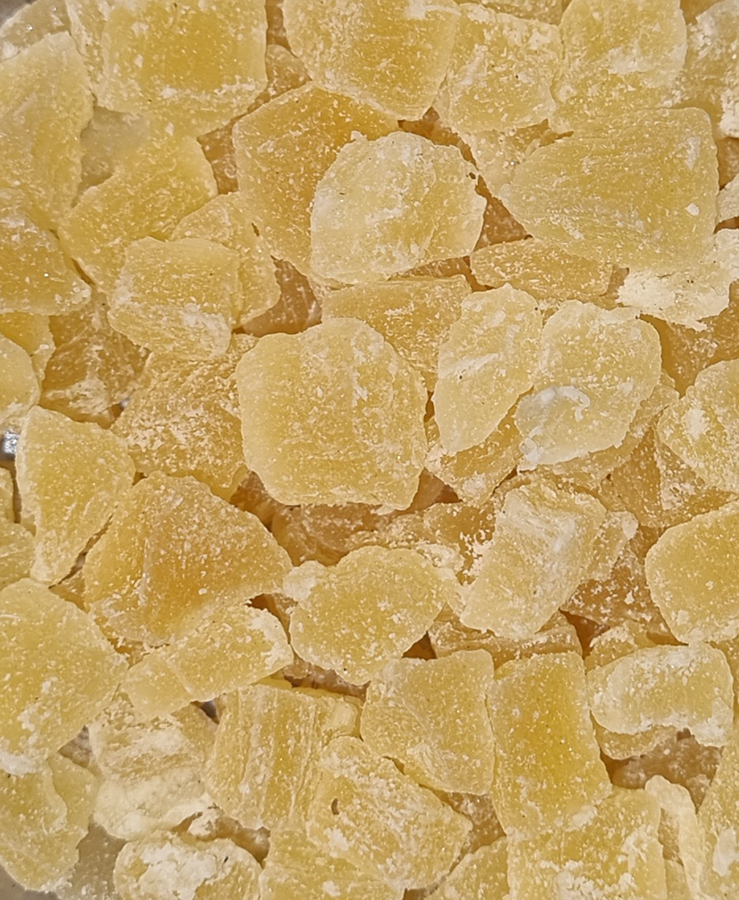
As omnivores, roaches can eat a wide variety of foods. So, their diet may consist of: fish flakes, alfalfa pellets, rolled oats, grains, decaying leaves, some rotting white wood can be added – although it’s not necessary, greens and veggies such as cucumber, zucchini, sweet potato and fruit. They especially love over-ripened fruit, though it tends to mold easily inside their container and cause issues with mold. As for protein, a small amount of cat kibble 2 to 3 times per week should be sufficient, but not exclusively this food on a daily basis. They also eat from our protein-based foods you can find on our website, with much more vital minerals and trace elements added. If you are tired with how quickly vegetables and fruit go moldy, you might want to try these dried fruit bites. I am extremely satisfied with them! I use them on all of my arthropods. A couple species also eat springtails and mites: Corydidarum tarsalis for example. However, not all roach species will eat the same foods. Some are picky eaters. Roaches also love insect jelly! I usually put 6 of them each week, and they are wiped clean by the time I open their container again!
The issue of feeding roaches mainly cat kibble
That is an unfortunate habit that was perpetuated mainly in the past, from breeders of roaches that were using them mainly as feeder insects. In the long run however, the percentage of dead vs live roaches will be visible since feeding only cat kibble is not healthy for them, they are not cats or dogs, and they thrive on a balanced diet.

Water
Some species – like roaches used as feeders, and in general fast breeders – may benefit from a shallow water container, although it’s not necessary. Most roach keepers / breeders are using insect jelly instead. Water can cause a lot of problems, since most roach colonies are overpopulated.
Introduction > Housing > Housing a) > Housing b) > Housing c) > Diet a) & b) > Diet c) > Humidity & Temperature > Breeding > FAQ
Diet (type c)
These roaches prefer mainly bee pollen, soft fruits and veggies. Some of them require lichen as well (Corydidarum magnifica). Fish flakes can be offered as well, and decaying leaves. If you are tired with how quickly vegetables and fruit go moldy, you might want to try these dried fruit bites. I am extremely satisfied with them! I use them on all of my arthropods.
Introduction > Housing > Housing a) > Housing b) > Housing c) > Diet a) & b) > Diet c) > Humidity & Temperature > Breeding > FAQ
Humidity & Temperature
The percentage of relative humidity in the roach container depends on the moisture needs of each roach species. Although tropical species will require a higher relative humidity, of 55 – 65%, most roach species are fairly adaptable and they are also somewhat drought tolerant. Consequently, roaches with high humidity needs, have a larger percentage of leaf litter and moss in their enclosure. Roaches that prefer lower humidity, require only a corner of that, or only decaying leaf litter.
Temperature is not usually an issue in most areas, and for most roach species. Room temperature is fine, unless the temperature drops below 20°C for more than one week. In that case a heat pad can be used. You may want to keep tropical roaches in the upper range of what we call room temperature, which is 22°C up to 30°C. Some species will benefit from a source of heat from above – Elliptorhina spp. for example. Although, that is not usually necessary, as these are also fairly adaptable species.
Introduction > Housing > Housing a) > Housing b) > Housing c) > Diet a) & b) > Diet c) > Humidity & Temperature > Breeding > FAQ
Breeding
Some roach species give birth to live young (nymphs), while other species lay oothecae (egg cases) that hatch at a later time. And there are even parthenogenetic species, like Pycnoscelus surinamensis for example, producing offspring, and only females of this species are known to exist. Some of these species will secrete their oothecae somewhere in their container, while other species (like Elliptorhina javanica) are keeping them attached on their abdomen, and partially extruded until they hatch. If one ootheca from those species falls on the ground, the nymphs inside won’t hatch, unfortunately. Sometimes these roaches may lose their ootheca due to stress, or overpopulation in their container. There are roach species that breed more easily than others. And even if a species breeds easily, in some keepers, they might take too long to breed, even if they keep those roaches in the correct conditions. I personally attribute this to energy (in the metaphysical sense) and I cannot attribute it anywhere else, when both keepers keep the same roach species in the same housing conditions, yet one group breeds much more easily than the other. Aside from that unaccountable situation, breeding should be a natural thing, however keep in mind that some species might take even 12 months to produce offspring (my Eublaberus sp. ‘Ivory’ and my Lucihormetica subcincta for example). Specifically, my Lucihormetica verrucosa are extremely prolific, while Lucihormetica grossei and Lucihormetica subcincta are not producing that much offspring. If you keep a roach species and you didn’t see any offspring within three months from the adults, check out the ambient temperature, and raise it with a heat pad or a ceramic lamp that emits heat from above. Usually the newborn nymphs have different colors than the adults, and all of them are staying under the belly of their mother for protection and breastfeeding.
Introduction > Housing > Housing a) > Housing b) > Housing c) > Diet a) & b) > Diet c) > Humidity & Temperature > Breeding > FAQ
FAQ
Antennae, wings, legs missing
Question: I have noticed a couple roaches missing one antenna, or having it broken. And some other with damaged wings. Why is that?
Answer: Roaches with half antenna or missing one antenna can be an indication that the roaches are hungry, and nibble on each other. Damaged wings however, may be a sign of being busy with mating (usually several males are mating with a single female, damaging as such her wings). Other times males can fight during mating and they could nibble and harm each other.
For lichen, the only way to be sterilized is to soak the lichen twigs in water for one day, and on room temperature, ensuring that you don’t induce hibernation to any possible hitchhiker. So even if it’s not expected after that procedure, bugs to arise, it is still possible to appear some times, as some hitchhiker arthropods might not drown.
Diurnal / nocturnal
Question: Are roaches active during the day (diurnal) or during the night (nocturnal)?
Answer: Most roaches are active during the early morning hours and during night. But there are some species that are active during the day, or even both day and night.
Feeding only cat kibble
Question: I have seen other roach keepers giving mainly cat kibble to their roaches
Answer: Oh please don’t offer them cat kibble as the only source of food. They are not cats or dogs and they thrive on a balanced diet. That was a habit from the past, mainly from breeders using them as feeder insects.
Light. Is it necessary?
Question: Should I use special light for the roaches?
Answer: Most roaches are nocturnal species, and therefore they do not even require a source of visible light but they can even be kept in dark (non-transparent) containers. And for the few species that are active during the day, again it is not necessary to use visible light, although it won’t harm them.
Roaches escaping
Question: What should I do if a number of roaches escape?
Answer: Roaches are escape artists. One should consider every aspect when housing them. Hungry roaches may even eat the silicone that keeps their air vent opening on the enclosure and escape. That is why I seal with silicone from the outside and I use air vents made of hard plastic, or aluminum (sink strainers are a great option!). But even if some roaches – from those we mention here – escape, they cannot live outside their container. Personally I don’t use roach species that are – or can become pests, and I don’t recommend keeping them as pets. Other roach species that can also fly (Gyna spp.) can escape easier than others. These species is best if they are kept in taller enclosures with an opening on the front side, since when they fly they fly towards the ceiling of their enclosure.
Two roach species together?
Question: Can I keep two roach species together?
Answer: Yes, you can. In fact, all roach species can live together. But expect certain species to outcompete other species. That means that after, let’s say six months or later, you will see much more roaches from one species, assuming you were keeping two species with different prolificacy rates.
White roaches?
Question: Why are some roaches white, like albino?
Answer: Roaches that have recently shed their exoskeleton, look like an imaginary albino cockroach. However it’s just their exoskeleton that is still soft and without any pigment. As their exoskeleton hardens, they gradually get their normal colors back.
Text copyright © December 2024 – 2025, G. Deoudis for EXUVIUM isopods.
We provide reliable shipping across the EU, including popular destinations like Germany, France, and Italy. See our full list of delivery locations here.
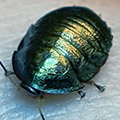 C. magnifica | 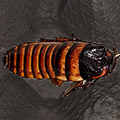 E. javanica |  E. sp. ‘Ivory’ | 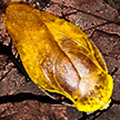 G. lurida ‘Yellow’ |  H. vittata |
 Exuvium Isopods