
Healthy, established colonies from a breeder in the Netherlands.


Ardentiella sp. ‘Volcano’, isopod information
Origin: Vietnam.
Scientific name: Ardentiella sp.
Variety name: Volcano.
Basionym: N/A
Synonyms: Merulanella sp.
Family: Armadillidae
Common name: N/A
Isopoda World List: genus Merulanella
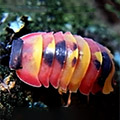
Ardentiella sp. ‘Volcano’ has those volcanic-like colors hence its name. Its bright colors range from yellow, to orange, to orange-red, to red-brown. It’s actually a variable species, with some isopods having a more bright color and others more earth-colors. It’s a beautiful isopod, with a beautiful pattern, that stands out immediately. Just like the rest of the Ardentiella isopods, this variety also has vibrant colors and an equally vibrant personality! Surely it’s not a beginner isopod, but when one learns a few things about them, then, keeping and breeding Ardentiella sp. ‘Volcano’ isopods in captivity is possible.
ℹ️ Merulanella spp. → Ardentiella spp. (only what was currently known as Merulanella).

€35,00 per isopod
€145,00 : x5+ isopods; €280,00 : x10+ isopods
Ardentiella sp. ‘Volcano’, isopod care
Size: adults may reach a length of 18 mm.
Activity: both day and night active; it’s a quite active isopod.
Terrarium: needs to be escape-proof, since Ardentiella isopods – especially the young and mancae – can climb vertically on plastic, like most roaches do. I keep them wetter – like the Cubaris isopods – with a layered setup of decaying leaves, forest moss, pieces of twigs with lichen and on top cork bark or tree bark. Check out also our premium substrate.
Temperature: 19 – 26°C; they prefer it a bit cooler.
Humidity: 60 – 75%; maintain by spraying periodically.
Diet: fruits, veggies, greens, forest moss, lichen, decaying leaves, rotting white wood, kinshi, molting of invertebrates and reptiles. And some protein, like gammarus shrimps. Also don’t forget a calcium source (cuttlefish bone, limestone & oyster seashell, limestone rock) to keep them healthy.
Foods they don’t eat: bee pollen.
Difficulty: moderate to easy for CB isopods. WC isopods are quite challenging.
Reproduction rate: fair to prolific for CB isopods. WC isopods are quite challenging.
Growth rate: normal to slow.
Lifespan: –


FAQ
Do they climb?
Q: Do the Ardentiella sp. ‘Volcano’ take advantage of the ability to climb?
A: The Ardentiella sp. ‘Volcano’ may be seen under leaf litter, but they also climb on high branches.
Diurnal / nocturnal?
Q: Are they diurnal or nocturnal? Ie: can you regularly admire them during the day?
A: They are active both day and night, mostly during the night though.
Do they eat house plants?
Q: I am going to add some special plants in the terrarium. Don’t they eat the plants and roots?
A: No they don’t eat the plants.
We provide reliable shipping across the EU, including popular destinations like Germany, France, and Italy. See our full list of delivery locations here.
See all the Ardentiella isopods for sale



 Exuvium Isopods