
Atopochetus spinimargo millipedes for sale
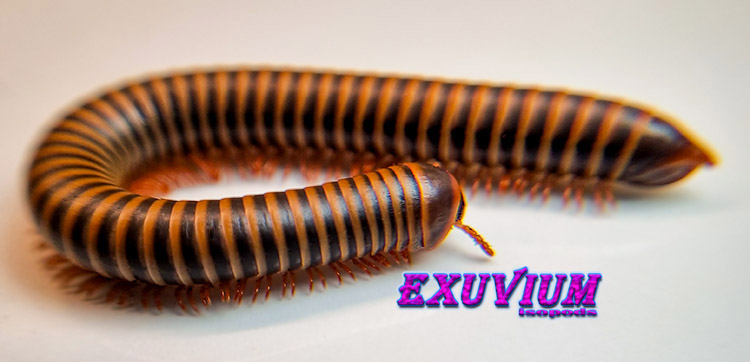
€6,00 (40 – 60 mm long). Price is per millipede.
Interested?
Atopochetus spinimargo, millipede information > care > photos > video > FAQ
Accepted scientific name: Atopochetus spinimargo [1]
Synonyms: —
Distribution: Thailand (original), Vietnam (introduced) [2]
Family: Pachybolidae
Common name: none. There are a couple unofficial names, but we wouldn’t list them here, because the one is the common name for another millipede (Atopochetus caudulanus) so it would cause confusion. And the other one is Red Satun, from the Satun province in Thailand. We have even seen it as “Red Saturn”. But this unofficial common name is for the reddish morph of Atopochetus spinimargo. The one we sell has orange to deep orange bands.
Source: 1. Millibase
Source: 2. GBIF
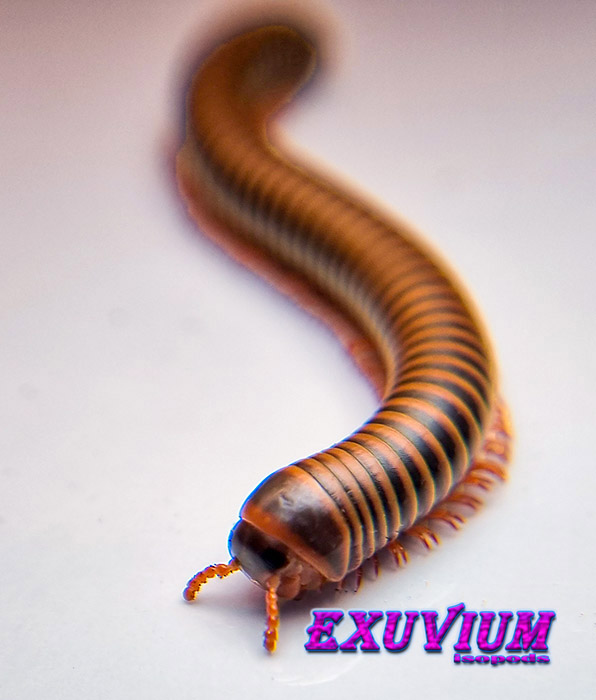
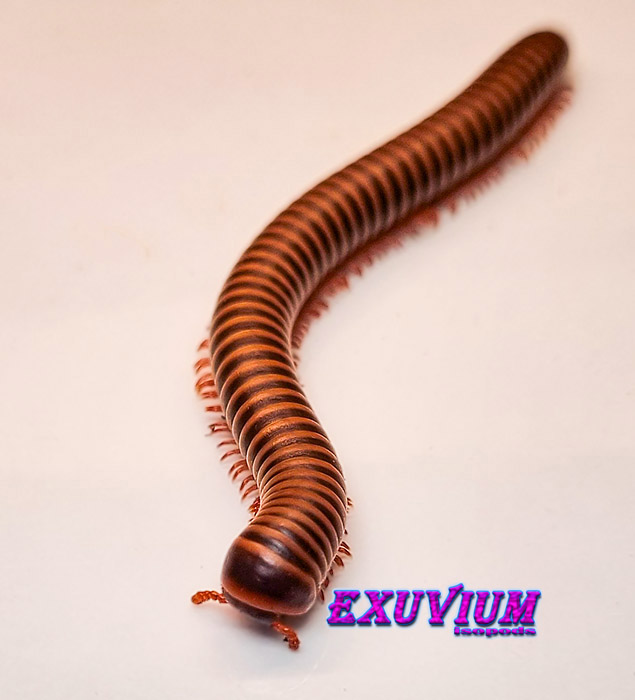
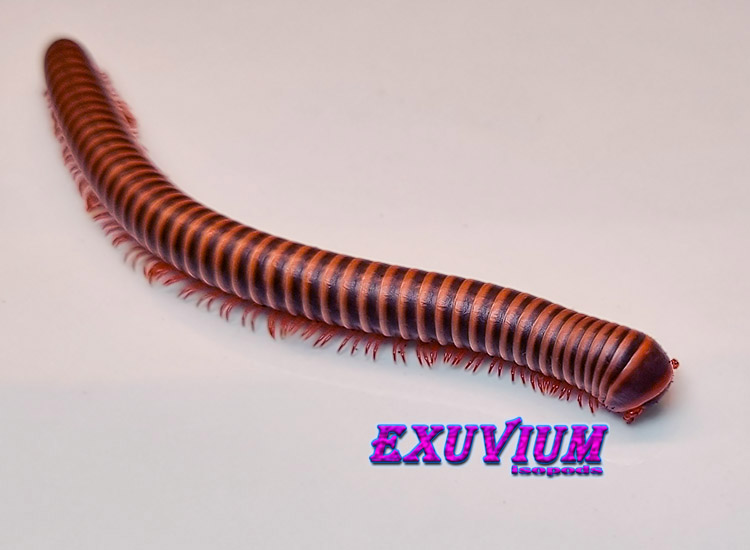
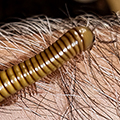
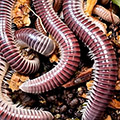
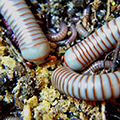
Atopochetus spinimargo is a species originating from eastern Thailand that later was introduced in Vietnam. It’s a smaller species of millipede and in bright light one can appreciate their beautiful orange stripes! 🥰 The east of Thailand is also called Isaan and is crossed by many rivers, above all the Mekong and the Mun. Here you will find green river landscapes, dense rainforests with waterfalls. Atopochetus spinimargo is at home in these humid to wet habitats. It regularly burrows into the ground to molt. The legs are relatively long, as one is used to from climbing millipedes. Therefore there should be enough climbing possibilities in the container / terrarium. A special feature of Atopochetus spinimargo millipede is the sexual dimorphism. The two sexes are differently colored in the adult stage. The males have black legs and also the segments are colored deep black and create a great contrast to the brown background. In contrast, the females have reddish feet and the segments are grayish. The young all look the same and are therefore visually indistinguishable. This species is also suitable for beginners, as it is very active and can survive longer dry periods unscathed.

Atopochetus spinimargo, millipede care
Size: adults may reach a length of 80 – 100 mm.
Activity: crepuscular and nocturnal when young. However, this changes when they are adults. Apparently their self-confidence increases so much that they can be seen running around on branches and on the ground during the day.
Diet: lichen, moss, fruits, veggies, greens, fish flakes, decaying leaves, rotting white wood, lime, and they love eating carrot sticks and dried fruit bites. They also enjoy the weekly insect jelly.
Terrarium: the depth of the substrate should be at least a little deeper than the total length of an adult millipede; because when they molt they need to go deep in the substrate and disappear for about a week to molt their skin. The substrate can also be muddy, as known from snail terrariums. Therefore Atopochetus spinimargo is also very suitable as a social animal in a snail terrarium.
Substrate: check our premium substrate for millipedes.
Temperature: 20 – 27°C
Humidity: the substrate should always be kept semi-moist. A humidity of 75-90% is the best for their natural habitat. The substrate can also be covered with leaves, pieces of bark or moss. This helps to protect it from drying out.
Difficulty: easy
Reproduction rate: prolific
Growth rate: normal
Lifespan: 2 – 3 years.
Handling: Millipedes may secrete a defense secretion when disturbed. If you don’t have medical records of allergic reaction, it is absolutely safe to let them crawl onto your hands.

FAQ
I have read somewhere that isopods can threaten millipedes during molting. Is that true?
That’s not a serious threat for the millipedes, if you avoid certain isopod species known to be aggressively prolific (such as Porcellionides pruinosus and Porcellio laevis). I’ve had Cubaris isopods in my millipedes containers for years and there has never been a problem.
Can I keep millipedes together with hissing cockroaches, or other cockroach species?
Personally, I never keep cockroaches together with millipedes. Cockroaches eat anything and can eat millipede eggs. Also, both species produce a lot of frass. So they need a large enclosure.
We provide reliable shipping across the EU, including popular destinations like Germany, France, and Italy. See our full list of delivery locations here.


 Exuvium Isopods