
Some common misconceptions regarding isopods and what is actually true.
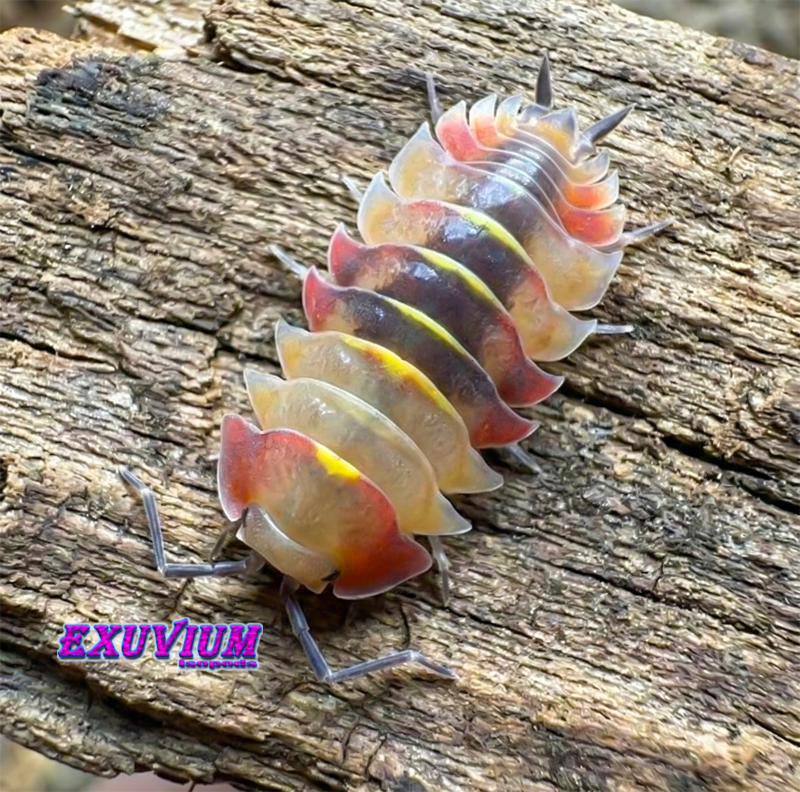
Isopods are often surrounded by myths because they occupy a strange biological niche: they are crustaceans (like shrimp and crabs) that have managed to conquer land, yet they look like insects.
Here is a complete list of misconceptions regarding isopods, categorized by their type and behavior.
I. Classification & Identity Misconceptions
- Misconception: “Isopods are bugs or insects.”
- Fact: Isopods are crustaceans. They are more closely related to lobsters, crabs, and shrimp than they are to ants or beetles. They are the only group of crustaceans that have successfully adapted to living entirely on land.
- Misconception: “They are pests that infest houses.”
- Fact: While they may wander indoors, they are nuisance invaders, not true pests. Unlike cockroaches or termites, they do not eat structural wood or human food, and they cannot survive long in the dry environment of a typical home. They usually die of dehydration within a few days of entering a house.
II. Terrestrial Isopods (Woodlice / Pillbugs) Misconceptions
- Misconception: “All woodlice can roll into a ball.”
- Fact: Only certain families of isopods can roll into a sphere (conglobation). This include the:
- Armadillidiidae: The most common “Roly-poly” found in European and North American gardens (e.g., Armadillidium vulgare).
- Armadillidae: This family is structurally different and dominates in tropical regions. It includes the trendy “designer” isopods currently popular in the pet hobby, such as the Rubber Ducky Isopod (Cubaris sp. ‘Rubber Ducky’).
- Tylidae: Known as “Sand Pills,” these are found on sandy beaches and roll into perfect balls.
- Cylisticidae: (e.g., Cylisticus convexus) These can roll, but they often do it imperfectly, leaving their legs visible or forming a “teardrop” shape rather than a perfect sphere. Hence the common name of the Cylisticus convexus → Teardrop Woodlouse.
- Misconception: “Isopods eat your garden vegetables.”
- Fact: Isopods are primarily detritivores, meaning they eat decaying organic matter (decaying leaves, rotting wood, and compost). They are nature’s recyclers. While they can nibble on very soft seedlings or strawberries if moisture is low, they generally prefer rotting material over living tissue.
- Misconception: “Isopods bite humans.”
- Fact: Terrestrial isopods cannot bite humans. Their mouthparts are designed for rasping and chewing soft, decaying plant matter. They are completely harmless to handle. Sometimes they just try to taste what they are on (your hand) but they cannot bite you.
- Misconception: “A bright blue woodlouse is a rare/shiny variant.”
- Fact: If you find a pillbug that is a brilliant, iridescent blue or purple, it is likely infected with an Iridovirus (Invertebrate Iridescent Virus 31). This virus crystallizes inside them, reflecting blue light. Sadly, this means the isopod is sick and will likely die soon. Watch here an isopod infected with the iridovirus.
- Misconception: “Bicolored isopods (half dark, half light) are a unique species.”
- Fact: This is usually just a regular isopod in the middle of molting. Unlike insects that shed their skin all at once, isopods molt in two halves (biphasic molting). They shed the back half first, then the front half a few days later, often leaving them looking “half-dressed” in the interim. In that phase isopods are soft and vulnerable. You should leave them alone and if you plan shipping some to a friend, avoid choosing those that are in the molting phase, cause most likely they are not going to make it.
III. Physiological Misconceptions
- Misconception: “Land isopods have lungs.”
- Fact: They still breathe through gills (pleopodal lungs). This is why they are restricted to damp environments (under rocks, logs, or leaves). They require a thin film of moisture on their gills to exchange oxygen.
- Misconception: “Because they have gills, land isopods can swim.”
- Fact: Most terrestrial isopods (woodlice) will drown if submerged in water for too long. Their gills are adapted for damp air, not full submersion.
- Misconception: “Isopods urinate like mammals.”
- Fact: They do not urinate. Instead, they can tolerate high levels of ammonia gas, which they release through their exoskeleton (specifically through their shell) to conserve water.
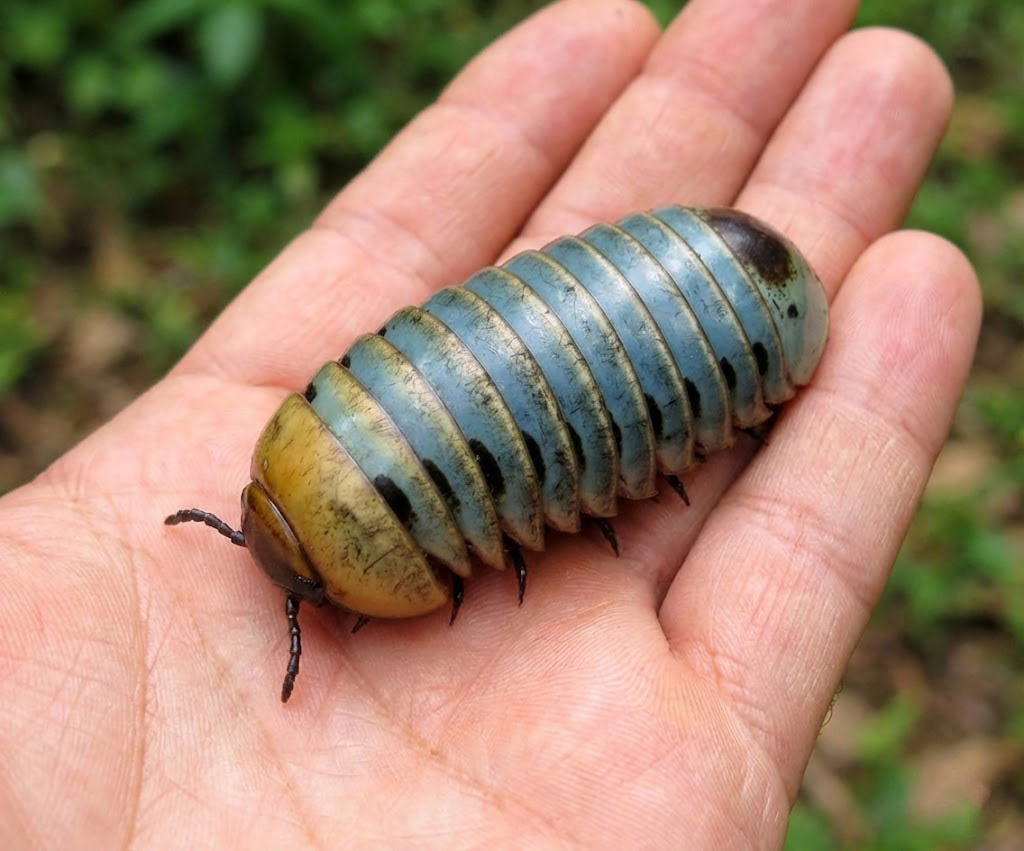
- Misconception: “The giant pillbug”
- “Hey, I found a giant isopod in the woods!”
- Fact: If you see a creature that looks exactly like a rolling isopod but is much longer, thicker, and has more legs (isopods have 7 pairs, this creature has more), it is likely a Pill Millipede (Order Glomerida or Sphaerotheriida). This is a case of convergent evolution—two unrelated animals evolving the exact same armor and rolling behavior.
 Exuvium Isopods
Leave a comment