
Healthy, established colonies from a breeder in the Netherlands.

- €5,00 : 5x roaches
- €8,00 : 10x roaches
- €12,00 : 15x roaches
- €17,50 : 25x roaches
- €30,00 : 50x roaches
- €50,00 : 100x roaches
- €100,00 : 200x roaches
- €150,00 : 300x roaches
- €200,00 : 400x roaches
Interested?
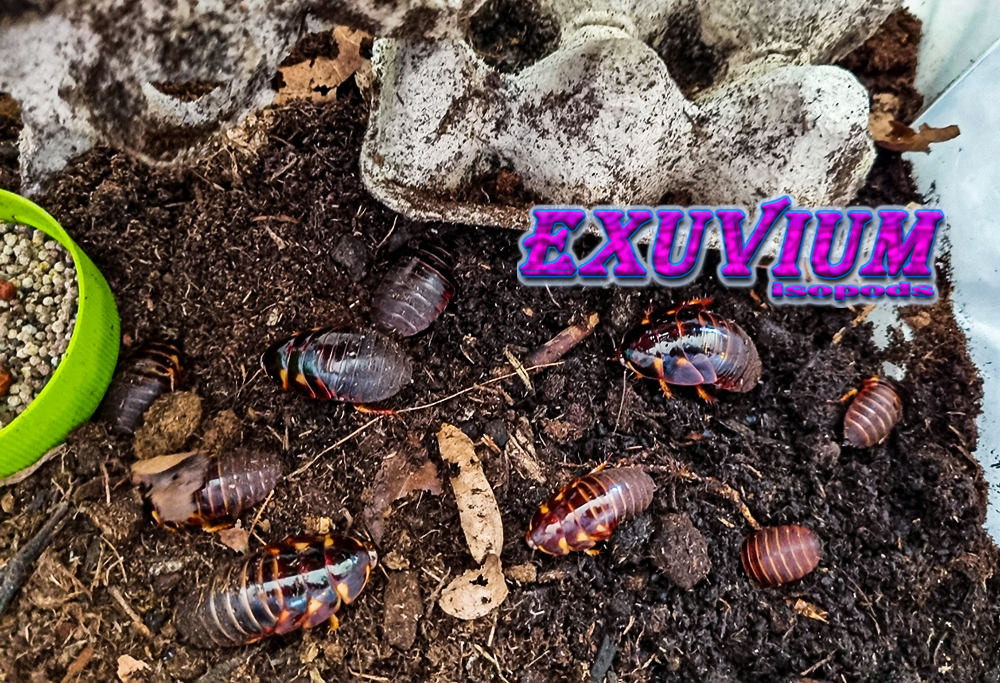
Listed for sale are mixed size CB nymphs. According to what is available larger nymphs to sub-adults might be added.
Eublaberus distanti ‘Ivory’ information > care > photos > video > FAQ
Origin: Central America.
Scientific name: Eublaberus sp.
Basionym: N/A
Synonyms: Eublaberus sp. ‘Ivory’
Family: Blaberidae
Common name: Ivory Head Cockroach.
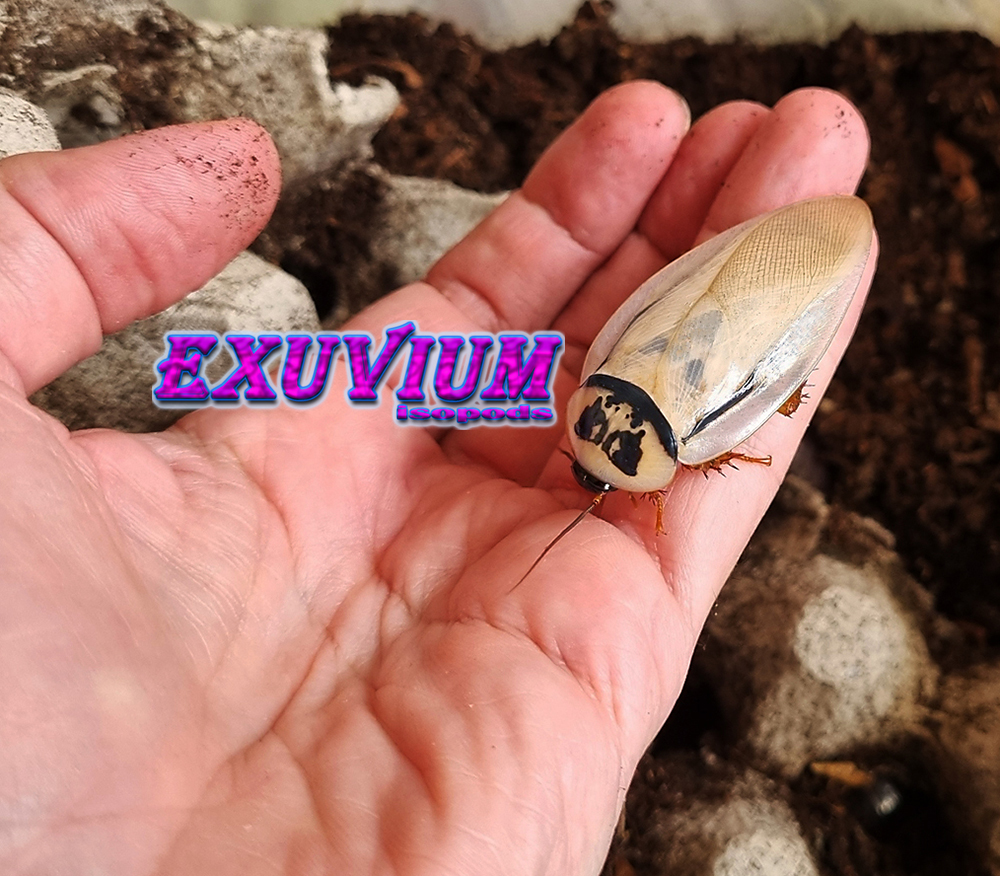
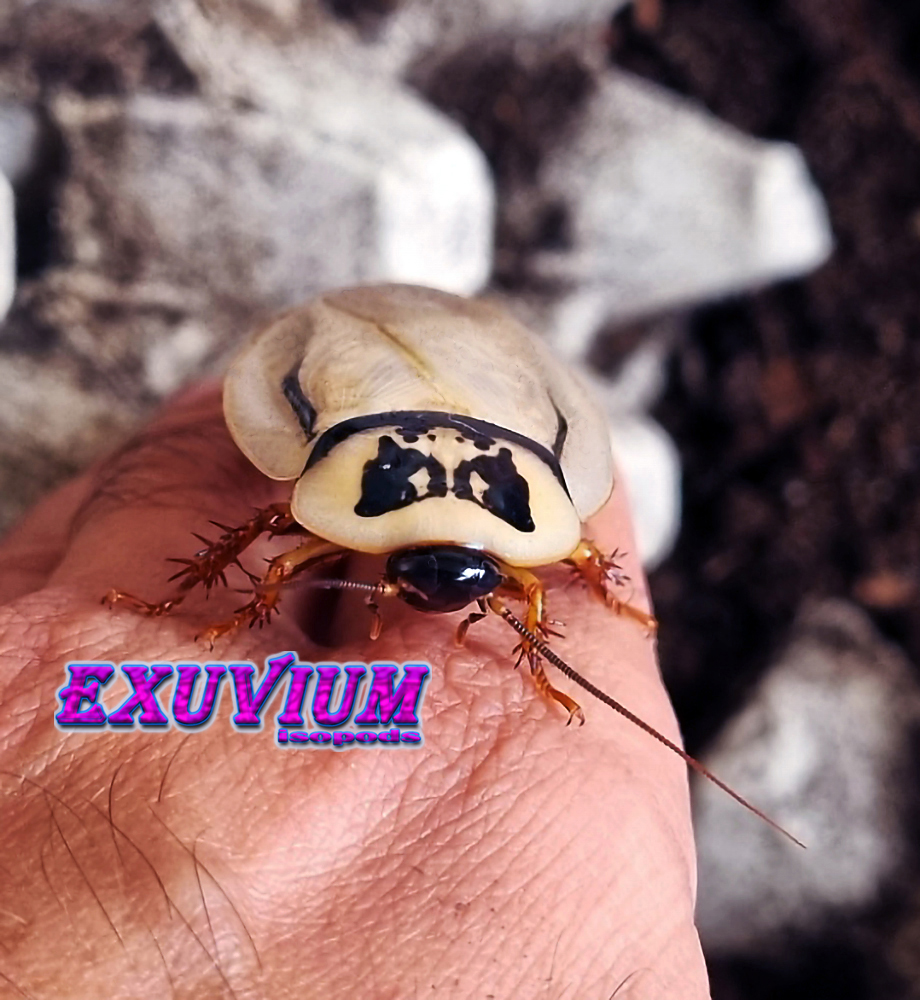
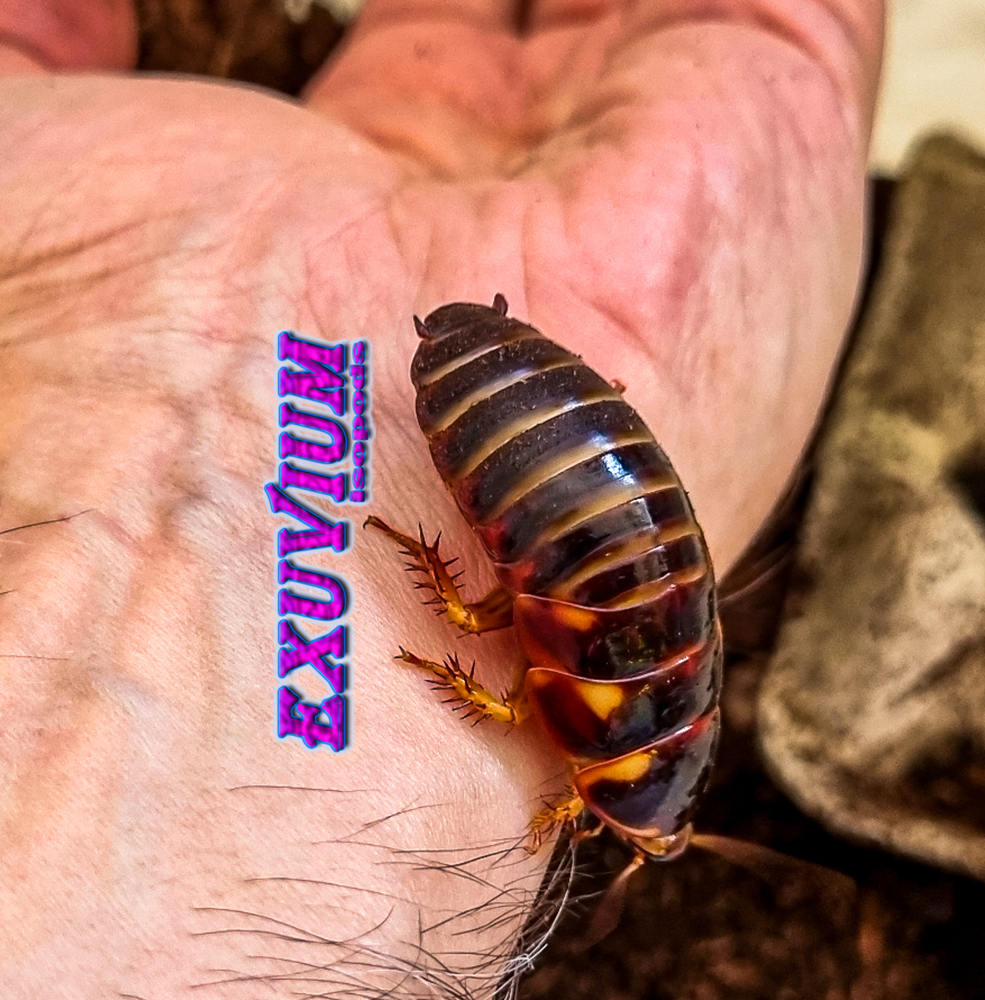
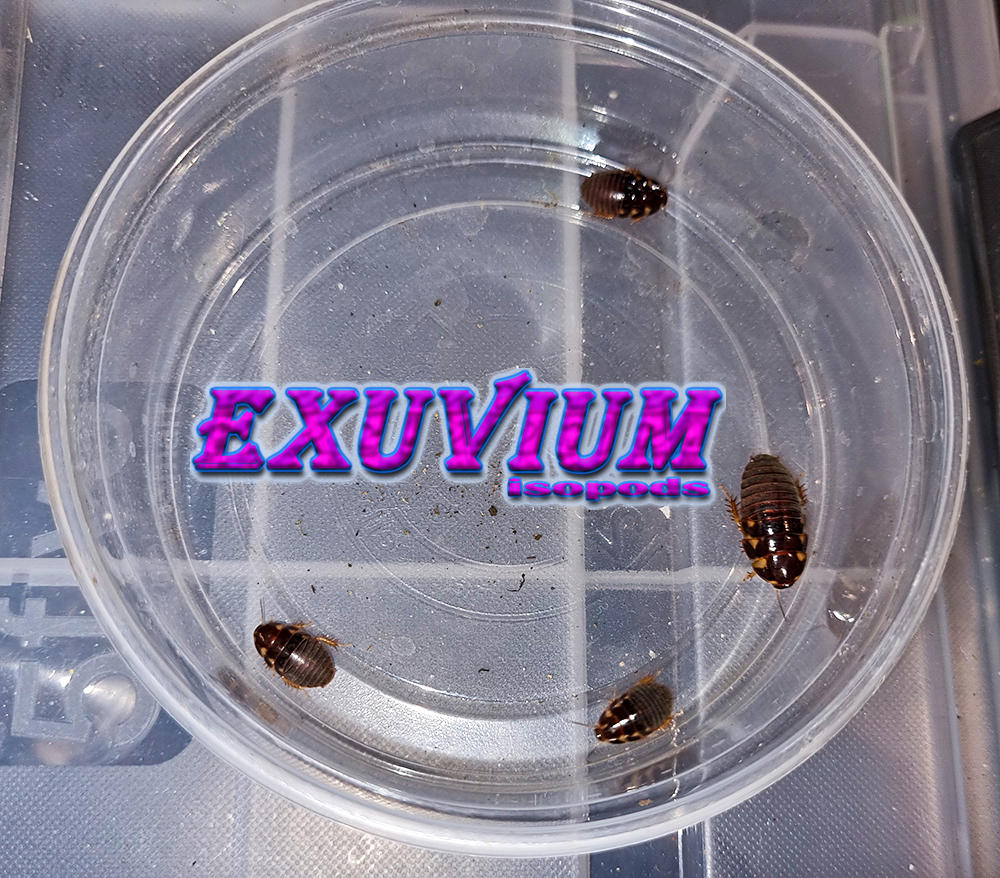
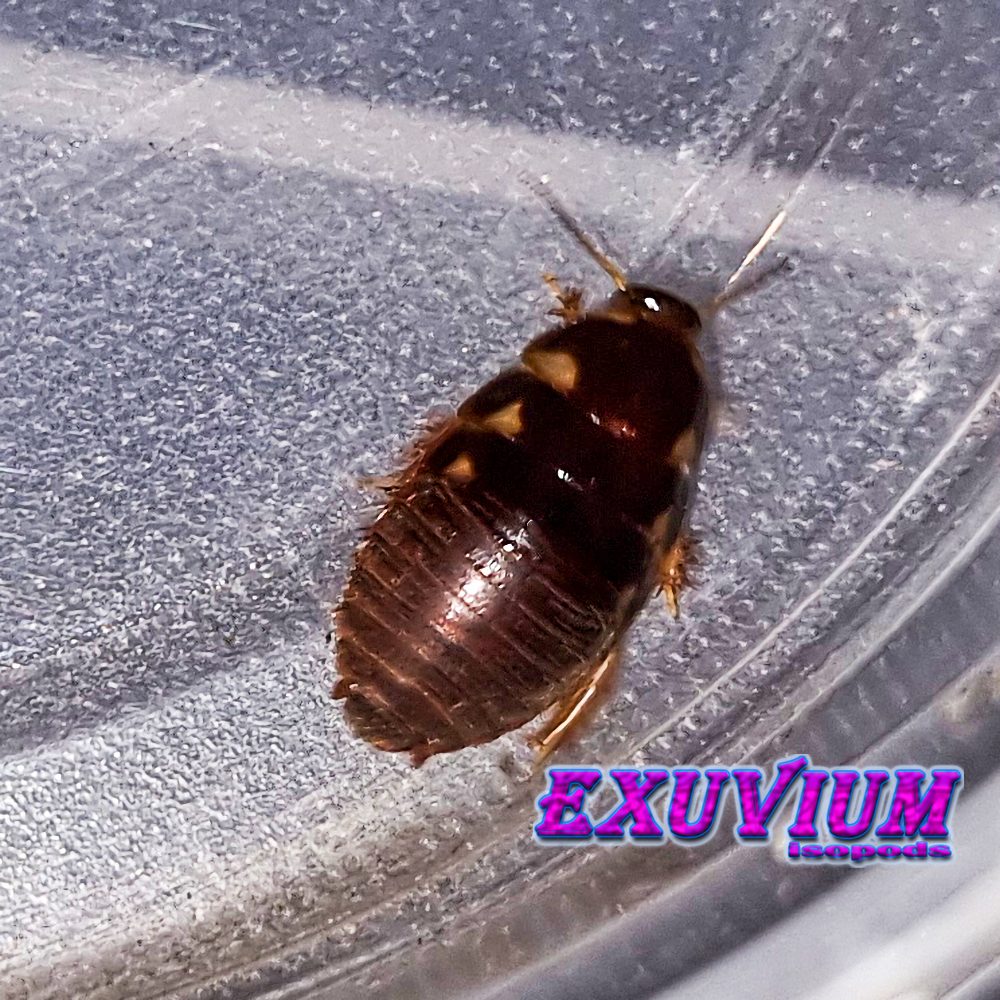
Eublaberus distanti ‘Ivory’ was previously known as Eublaberus sp. ‘Ivory’. This is an interesting and active roach with long wings that both sexes have. They can’t fly though, but if you give them vertical space you will see them gliding from the highest perches down to the ground. Their mating behavior is also interesting. More than three to four males start surrounding the receptive female and by flapping their wings up and down they try to seduce her and to convince her to mate with them. At this mating period and when the lights are dim, you will often hear the male adult roaches chasing the females and also other rival males. The young roaches may take up to one year to mature, and when fully grown, the adult roaches are much larger in size than the Blaptica dubia roach.
Eublaberus distanti ‘Ivory’ care
Size: 40 – 50 mm; they get about double the size from Dubia roaches.
Activity: night; early morning.
Terrarium: keep ⅕ moist with a little moss. The substrate can be a mixture of peat (without fertilizer) mixed with crushed rotting leaves, some coconut coir and a little sand. Make it at least 5 cm deep so that they can bury in it when they need to. They also need hiding spots to go under and hide themselves during the day. These can be carton egg cases, cork bark, or hard bark from other trees.
⚠️ Their terrarium needs to be escape-proof, so that the roaches cannot squeeze through the lid and escape.
Temperature: 27 to 29°C
Humidity: 50% – 70%
Diet: omnivorous; fruits, greens & vegetables, fish flakes, rotting leaves / white wood, decaying leaves and cat / dog kibble.
Can climb?: no they can’t climb smooth surfaces, just as Blaptica dubia can’t.
Can fly?: No they can’t, but they can glide.
Burrowing?: nymphs mainly do bury into the soil, but also adults. Provide at least 3 – 5 cm of substrate made from a mix of cocos, sand, unfertilised soil and leaf litter. Also you will need to keep it moderately humid for best results.
Difficulty: easy
Growth rate: Growth rate depending on temperature and diet. They may take 5 months to one year to mature. Both sexes develop wings.
Reproduction rate: prolific in an established colony. Females give birth every month to at least 10 nymphs.
Lifespan: About 2 – 3 months for males and 2 – 3 years for females. Lifespan has also to do with the temperature, so if it is a bit cold, they live a bit longer.



FAQ
Can the females reproduce without males?
No, both sexes are needed.
Do the females lay eggs or give birth to live animals?
They give birth to litters of 20 – 30 nymphs.
Are males dominant towards each other?
Mostly while mating; but that’s normal, it’s part of their mating behavior, not something to worry about.
How often do they breed?
Frequently.
We provide reliable shipping across the EU, including popular destinations like Germany, France, and Italy. See our full list of delivery locations here.



 Exuvium Isopods